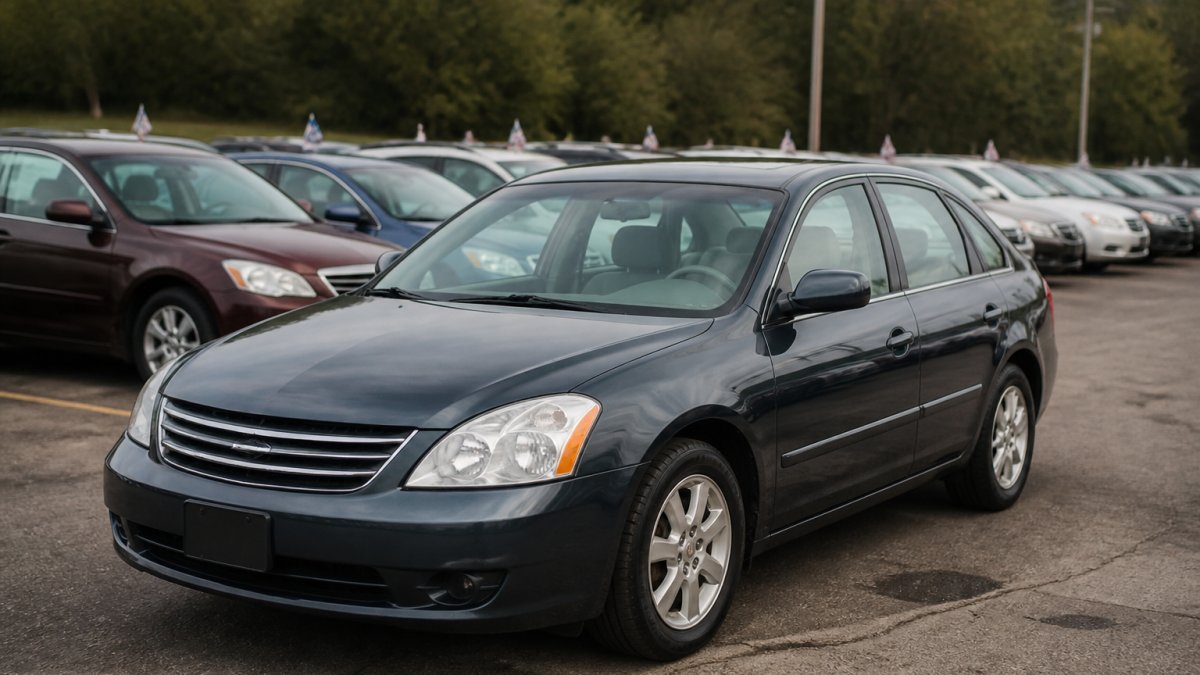
 comparison
Dealership Financing vs Bank Loans: 2026 Guide
Table of Contents
- Dealership Financing Versus Bank Loans: Key Differences
- Pros and Cons of Dealership Financing
- Pros and Cons of Bank Loans
- How to Get Preapproved for a Car Loan
- Understanding Car Loan Interest Rates
- Manufacturer Financing Incentives and Special Offers
- How to Negotiate Car Financing Terms
- Which Option Is Right for You?
- Frequently Asked Questions
Last Updated: October 8, 2026
Dealership Financing Versus Bank Loans: Key Differences
When you're ready to buy a car, understanding the difference between dealership financing versus bank loans is crucial. These two paths to vehicle ownership work in fundamentally different ways, and choosing the right one can save you thousands of dollars over the life of your loan.
Dealership financing means the dealership arranges your loan through lenders they work with. You handle everything at the lot: find the car, negotiate the price, and complete financing paperwork all in one place. Bank loans mean you get pre-approved for a loan directly from a bank or credit union before you shop.
The core difference comes down to control and convenience. Dealership financing offers speed and simplicity. Bank loans offer transparency and often more favorable terms if you have solid credit. Neither is inherently better, it depends on your credit situation, timeline, and how much time you want to spend comparing offers.
According to the Consumer Financial Protection Bureau's guide on dealer-arranged versus bank financing, understanding how these channels work helps you make an informed decision about which route fits your financial situation.
Pros and Cons of Dealership Financing
Dealership financing has real advantages, especially if you're in a hurry or have less-than-perfect credit. The biggest pro is convenience: you walk into the lot, find your car, and drive away the same day with financing already arranged. No separate bank appointments. No waiting for pre-approval letters.
Pros of dealership financing:
- One-stop shopping: car selection and financing happen simultaneously
- Faster approval process, sometimes within hours
- Flexibility for buyers with lower credit scores
- Access to manufacturer incentives and promotional rates
- Dealerships often work with multiple lenders, giving you options
Cons of dealership financing:
- Interest rates can be higher than bank loans, especially if your credit is weak
- Less transparent pricing; add-ons and extended warranties can inflate your total cost
- Limited ability to negotiate once you've agreed to terms
- You see fewer loan options upfront compared to shopping multiple banks
The real risk with dealership financing is that the speed and convenience can work against you. You might accept a higher interest rate just to avoid the hassle of comparison shopping. Dealership financing makes sense when you need a car quickly and your credit situation limits your bank options. At Buy & Buy Auto Sales, we work with you to find financing that fits your budget and timeline, regardless of your credit history.
Pros and Cons of Bank Loans
Bank loans give you power: you know your exact rate and terms before you shop for a car. You can compare offers from multiple banks and credit unions, then walk into a dealership as a cash buyer with a pre-approval letter in hand.
Pros of bank loans:
- Competitive rates when you have good credit
- Transparent terms you can compare across multiple lenders
- Ability to shop around and negotiate better deals
- No dealership markup or hidden fees
- Pre-approval shows dealerships you're a serious buyer
Cons of bank loans:
- Requires time to apply and wait for approval
- Stricter credit requirements; harder to qualify with poor credit
- Miss out on manufacturer incentives tied to dealership financing
- Longer timeline before you can drive home a car
- If you don't find a car within the loan's timeframe, approval may expire
Bank loans work best when you have time to prepare and decent credit. If you're starting with a low credit score or no credit history, a bank may reject you outright. That's where dealership financing becomes the more realistic option.
Research from Bank of America's Better Money Habits guide on bank versus dealer financing emphasizes that buyers should review both options rather than assuming one is always superior.
How to Get Preapproved for a Car Loan
Getting preapproved for a car loan is straightforward and takes 15 to 30 minutes. Here's how the process works.
Step 1: Gather your documents. You'll need proof of income (recent pay stubs), identification, and your Social Security number.
Step 2: Check your credit. Pull your credit report from one of the three major bureaus (Equifax, Experian, TransUnion). Look for errors and dispute them if needed. Your credit score directly affects the interest rate you'll receive.
Step 3: Apply with a bank or credit union. Many let you apply online. You'll provide personal information, income details, and the type of vehicle you're interested in.
Step 4: Review your pre-approval letter. Once approved, the lender sends a letter stating your approved loan amount, interest rate, and loan term. This letter is valid for a set period, usually 30 to 60 days.
Step 5: Shop for your car. Use your pre-approval to negotiate from a position of strength. You know exactly what you can spend and what your monthly payment will be.
Understanding Car Loan Interest Rates
Your interest rate is the most important number in any car loan. It determines how much you'll pay in total over the life of the loan.
Interest rates depend on several factors. Your credit score is the biggest one. Borrowers with credit scores above 750 typically qualify for the best rates. Those with scores below 620 face much higher rates or may be denied entirely.
The type of vehicle also matters. New cars usually get lower rates than used cars. The loan term matters too: a 36-month loan typically has a lower rate than a 72-month loan because the lender's risk is lower.
Dealership financing rates are often higher because dealerships mark up the rate and keep the difference. A bank might approve you at 5%, but the dealership might offer you 6% and pocket the extra 1% as profit.
First State Bank's analysis of bank versus dealership car loans notes that the total cost of the loan, not just the monthly payment, should guide your decision.
| Factor | Impact on Rate |
|---|---|
| Credit score above 750 | Lowest available rates |
| Credit score 650-750 | Moderate rates |
| Credit score below 620 | High rates or denial |
| New vehicle | Lower rates |
| Used vehicle | Higher rates |
| 36-month term | Lower rates |
| 72-month term | Higher rates |
Manufacturer Financing Incentives and Special Offers
Dealerships often have access to manufacturer incentives that banks don't. These can include low promotional rates (sometimes 0% APR for qualified buyers) or cash rebates applied directly to your purchase.
These offers come with strings attached. A 0% APR promotion usually requires excellent credit, a large down payment, and a shorter loan term. You might qualify for a 0% rate on a 36-month loan but not a 60-month loan. The incentive is real, but it's designed for buyers in strong financial positions.
Manufacturer incentives change frequently, sometimes monthly. They vary by vehicle model, trim level, and current inventory. A hot-selling model might have no incentives. A slow-moving model might have deep discounts or low-rate financing to move inventory.
The key question: does a manufacturer incentive beat what you'd get from a bank? If a bank pre-approves you at 4.5% with no incentives, and a dealership offers 3.9% financing on a specific vehicle with a manufacturer incentive, the dealership deal might be better.
How to Negotiate Car Financing Terms
Once you've decided between dealership financing and a bank loan, negotiation begins. Most buyers focus on the car's price and ignore the financing terms, a costly mistake.
If you're using dealership financing: Don't accept the first rate offered. Ask the finance manager if they can improve it.
If you're using a bank pre-approval: Use it as use. Tell the dealership you have pre-approval at a specific rate. Some dealerships will match or beat that rate to keep the financing in-house.
Negotiate the loan term carefully. A longer term (72 months instead of 60 months) lowers your monthly payment but costs significantly more in total interest. Calculate the total cost, not just the monthly payment.
Beware of add-ons. Extended warranties, gap insurance, paint protection, and fabric protection sound optional but are often bundled into your financing. Ask what's included in the base loan and what's optional.
Get everything in writing. Before you sign, review the full loan agreement. Verify the interest rate, loan term, monthly payment, total amount financed, and any add-ons. Don't sign anything you don't understand.
Which Option Is Right for You?
Your choice between dealership financing versus bank loans depends on three factors: your credit score, your timeline, and your patience for comparison shopping.
Choose dealership financing if:
- Your credit score is below 650
- You need a car within the next week
- You value one-stop convenience over optimal rates
- You want access to manufacturer promotional rates
- You're buying from a dealership you trust
Choose bank financing if:
- Your credit score is 700 or higher
- You have 4 to 6 weeks to prepare
- You want to compare rates across multiple lenders
- You're buying a used car and want the lowest possible rate
- You want complete transparency before you shop

Most buyers benefit from getting pre-approved by a bank first, then comparing that offer against what a dealership can provide. You'll see both options clearly and can make an informed decision based on actual numbers, not guesses.
At Buy & Buy Auto Sales, we help you evaluate both paths. We can work with your bank pre-approval or provide competitive dealership financing options. Our team focuses on getting you pre-qualified in minutes so you can move forward with confidence, regardless of your credit history. We offer flexible terms, no hidden fees, and down payment flexibility designed to fit your budget. Apply now and get behind the wheel faster.
Frequently Asked Questions
Is it better to get a car loan from a bank or a dealership?
Neither option is universally better, it depends on your credit score, timeline, and financial situation. Bank loans often offer competitive interest rates if you have good credit, while dealership financing provides faster approval and may include manufacturer incentives. Compare both offers before deciding. The Consumer Financial Protection Bureau recommends getting pre-approved through a bank first, then comparing the dealer's offer to see which saves you more money overall.
Should I get preapproved for a car loan before visiting a dealership?
Yes. Getting preapproved for a car loan before shopping gives you a clear budget, stronger negotiating position, and a baseline interest rate to compare against dealer offers. Preapproval typically takes minutes and doesn't hurt your credit score significantly. You'll know exactly what you can afford and won't feel pressured to accept unfavorable terms at the dealership.
What's the difference between dealership financing and bank auto loans?
Dealership financing is arranged through the dealer's lender network, approval is often faster, even with lower credit scores, and you may qualify for manufacturer incentives. Bank loans come directly from the bank or credit union; they typically require stronger credit but often have lower interest rates for qualified borrowers. With dealership financing, the dealer handles paperwork at the lot. With a bank loan, you arrange it separately and bring the funds to the dealership.
Can dealership financing offer a lower interest rate than a bank?
Yes, especially if the manufacturer is offering special financing incentives or promotional rates. However, bank loans often have lower standard rates for borrowers with good credit. Always compare the APR (annual percentage rate) from both sources, including any fees. The total cost of the loan matters more than the interest rate alone, a slightly higher rate might mean lower fees or faster approval that benefits your situation.
Finding the right financing isn't just about the lowest monthly payment. It's about understanding your options, comparing real offers, and choosing the path that fits your financial situation. Whether you go with dealership financing or a bank loan, the time you spend comparing will pay off. At Buy & Buy Auto Sales, we're here to answer your questions and help you find financing that works for your life. Apply now and start your journey to vehicle ownership with confidence.