 ultimate-guide
What to Check When Buying a Used Car: 2026 Guide
Table of Contents
- Start With the Vehicle History Report and VIN Check
- Used Car Pre-Purchase Inspection Checklist
- Interior Electronics and Feature Testing
- Used Car Test Drive Tips for Real-World Conditions
- Questions to Ask When Buying a Used Car
- Used Car Financing for Bad Credit
- Red Flags: Private Seller vs. Dealer
- Conclusion
- Frequently Asked Questions
Last Updated: September 21, 2026
Start With the Vehicle History Report and VIN Check
A vehicle history report is a documented record of a car's past, compiled from title transfers, insurance claims, and law enforcement data. Before you inspect a single panel, pull the vehicle identification number and run it through a reporting service.
Here's what to look for:
- Title status: A clean title is the baseline. A salvage title means an insurer declared the car a total loss at some point.
- Flood damage: Water damage rarely shows up on a quick walkaround but destroys electronics over time.
- Odometer reading: Cross-check the mileage on the report against the physical dash. Rollbacks still happen.
- Accident history: Minor fender benders are fine. Frame damage is not.
Used Car Pre-Purchase Inspection Checklist
A used car pre-purchase inspection checklist is a structured, bumper-to-bumper review that you complete before money changes hands. It covers the exterior, the engine bay, the undercarriage, and everything you can test from the driver's seat. Budget 45 to 60 minutes for a thorough pass.
Exterior and Body Panel Checks
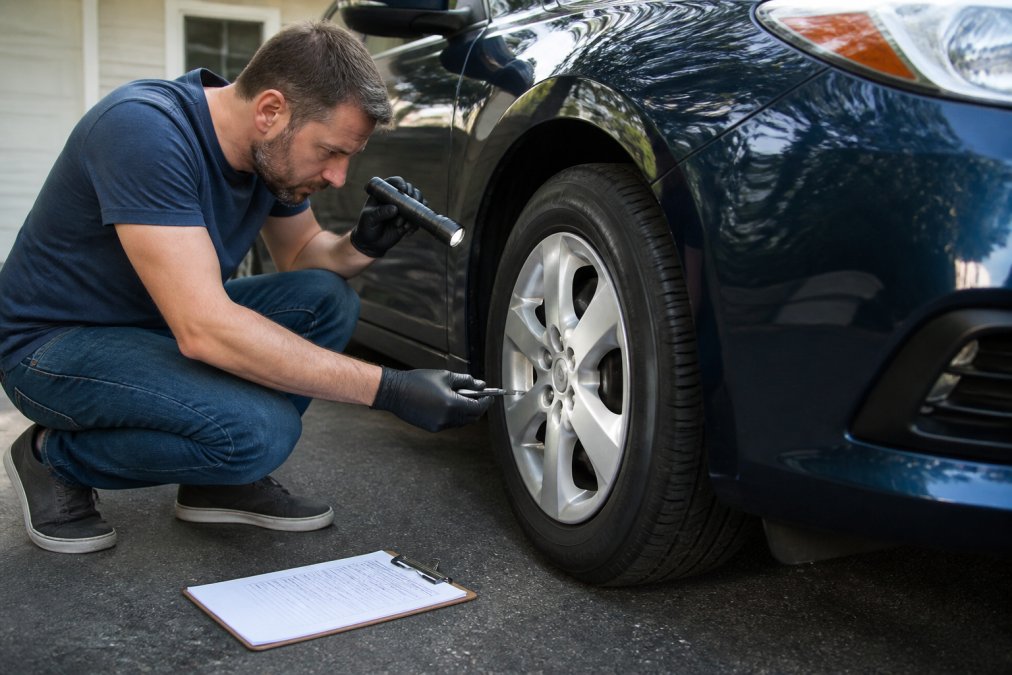
Walk the car in daylight and look down the side panels from the front bumper at eye level. Body panel alignment tells you more than any seller's story: uneven gaps or a door that sits proud of the fender usually mean prior collision repair. Run a magnet wrapped in a cloth over the quarter panels. It won't stick to filler.
Under the Hood and Under the Car
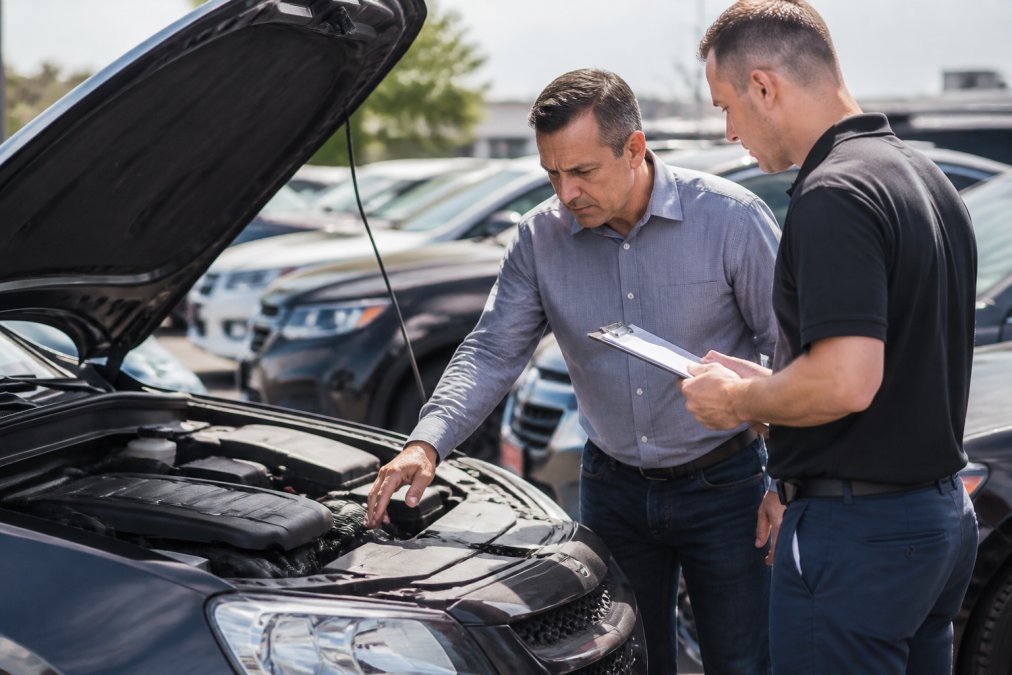
Pop the hood while the engine is cold. Engine oil condition should be amber or light brown, not black sludge. Check coolant levels in the reservoir, and look for fluid leaks on the ground beneath the car after it has sat for a while.
Tires, Brakes, and Suspension
Tread depth is the fastest read on how the previous owner treated the car. A new penny inserted upside down into the tread tells you if you're above 2/32 of an inch. Uneven tire wear patterns point to alignment or suspension problems.
Interior Electronics and Feature Testing
Interior electronics are where modern used cars quietly fail, and they are expensive to fix. Sit in the driver's seat with the engine off, then turn the key to accessory mode and test everything methodically.
Work through this list:
- Power windows, locks, and mirrors on every door
- Air conditioning performance: it should blow cold within 60 seconds
- Infotainment screen, backup camera, and all USB ports
- Key fob functionality, including remote start if equipped
- Dashboard warning lights: they should all illuminate briefly, then go out
Used Car Test Drive Tips for Real-World Conditions
A used car test drive should last at least 20 minutes and include highway, city, and stop-and-go driving. Dealers expect it. Private sellers should too.
- City streets: test brake responsiveness and steering at low speed
- Highway on-ramp: accelerate firmly and feel for transmission performance, especially hesitation between gears
- Rough pavement: this exposes suspension noise and rattles
- Parking lot: do a full lock-to-lock turn and check the turning radius
Questions to Ask When Buying a Used Car
The right questions to ask when buying a used car do two things: they surface the car's real history, and they test whether the seller is being straight with you. Ask these before you discuss price.
- How long have you owned it, and why are you selling?
- Do you have service records for maintenance and repairs?
- Has it ever been in an accident or had paintwork done?
- Are there any open recalls on this VIN?
- Can I take it to my own mechanic for a pre-purchase inspection?
Used Car Financing for Bad Credit
Used car financing for bad credit is possible, and the process is less painful than most shoppers expect. The catch is that the terms you get are driven almost entirely by three levers: your down payment, your proof of income, and how recent your payment history is. Pull all three in your favor before you ever step on a lot.
Know Which Lender Type You're Walking Into
Not every lender prices risk the same way. Understanding the tiers helps you predict your rate before you sit down at the finance desk:
- Buy-here-pay-drive lots: They finance in-house and report to credit bureaus, which can rebuild your score. The trade-off is a higher sticker price and a shorter warranty. Read the contract for a GPS kill-switch clause.
- Subprime lenders (banks and finance companies that specialize in lower credit tiers): They work through dealerships and typically want 10% to 20% down. Rates run higher than prime, but the loan reports to the bureaus.
- Credit unions: Often the best rate for a bruised score, especially if you have a membership history. Many run a "second-chance" auto loan program.
- Buy-here-pay-drive vs. subprime: The first is a dealer acting as lender; the second is a third-party lender the dealer brokers. The second usually gives you a lower price on the car.
The Down Payment Math That Actually Moves Your Rate
A larger down payment does two things at once: it shrinks the amount financed, and it signals to the lender that you have skin in the game. A common pattern is that moving from 5% down to 20% down can drop your offered rate by several percentage points. On a $15,000 car, that difference compounds over the life of the loan.
Documents to Bring
Come prepared with:
- Proof of income (recent pay stubs or bank statements)
- A valid driver's license
- Proof of insurance
- References with phone numbers
- A utility bill in your name for proof of residence
Pre-Qualification vs. Pre-Approval
Pre-qualification is a soft pull and gives you an estimated rate and budget. Pre-approval is a hard pull and gives you a firm number you can shop with. Get pre-approved by a credit union or your bank before you visit a dealer, then let the dealer try to beat it. That single move turns a high-pressure negotiation into a simple yes-or-no decision.
Watch the Add-Ons
Finance offices make margin on products, not just the loan. Expect to be offered gap insurance, extended service contracts, paint protection, and tire-and-wheel coverage. None of these are required to buy the car. Gap insurance is worth considering if you're putting less than 20% down, because it covers the difference between what you owe and what the car is worth if it's totaled.
Red Flags: Private Seller vs. Dealer
Private sellers and dealers carry different risks, and the red flags don't overlap much. Most guides hand you one generic warning list and call it done. The reality is that the two seller types fail in different ways, and the protections available to you are different too. Match your skepticism to the seller in front of you.
Private Seller Red Flags
- Title not in the seller's name. This is the single biggest warning sign. If the name on the title doesn't match the person selling, you may be dealing with a curbstoner, someone flipping cars without a dealer license, or a title-jumping scheme that can leave you unable to register the car.
- Refusal to meet at their home. A legitimate seller has no reason to hide their address. Meeting in a parking lot is a classic curbstoner move.
- Price far below market value. That usually means salvage title, flood damage, or a rebuilt vehicle being passed off as clean.
- Cash-only, no receipt, pressure to close today. Walk away.
- No service records and evasive answers about maintenance. Not disqualifying on its own, but combined with any of the above, it's a pattern.
Dealer Red Flags
- Pressure to sign before you've seen the vehicle history report. A reputable dealer will hand you the report without being asked.
- Fees that appear only at signing. Documentation fees, prep fees, and "market adjustment" add-ons should be disclosed in the advertised price or in writing before you commit.
- Refusal to let you take the car to an independent mechanic. This is the most telling one. A dealer confident in the car will let you take it.
- "As-is" with no disclosure. Many states require dealers to disclose known defects or prior salvage branding. Ask directly and get the answer in writing.
- Financing terms that change after you've agreed on a price. The classic "yo-yo", you sign, then the finance manager calls back to say the bank didn't approve the terms. You are not obligated to accept new terms.
The Legal Difference That Matters
This is the part most guides skip. When you buy from a dealer, you generally have implied warranty protections under state law, the car must be fit for its ordinary purpose at the time of sale, even if sold "as-is" in some states. When you buy from a private seller, those protections largely disappear. Most private sales are "as-is" by default, and your only recourse is what's written in the bill of sale.
The Paper Trail
With a dealer, insist on the out-the-door price in writing before you commit, so financing terms and fees are clear. With a private seller, write a simple bill of sale that includes the VIN, the odometer reading, the sale date, the price, and both parties' signatures. Get the title signed over in front of you, and confirm the seller's name matches the title before any money changes hands.
Conclusion
Buying a used car rewards preparation over enthusiasm. Run the VIN, inspect the panels and tires, scan for diagnostic trouble codes, drive it the way you actually drive, and get your financing sorted before you shop.
Frequently Asked Questions
What is a red flag when buying a used car?
A seller who refuses to let you get a pre-purchase inspection is the biggest red flag. Others include a title that says salvage or rebuilt, odometer readings that don't match service records, fresh paint on one panel only, and a seller who insists on cash with no paperwork. If the seller pressures you to skip the test drive or won't share the vehicle identification number, walk away. There are plenty of used cars for sale that come with clean histories.
Should I get a pre-purchase inspection for a used car?
Yes, always. A pre-purchase inspection by an independent mechanic costs far less than repairing a hidden problem like a failing transmission or frame damage. The mechanic will check the engine, transmission, brakes, suspension, and scan for diagnostic trouble codes. Schedule it before you talk numbers. If the seller won't allow it, that tells you something important about the car.
What documents should I verify before finalizing a used car purchase?
Ask to see the title, the vehicle history report, and any service records. Check that the name on the title matches the seller's ID. Look for a clean title, not salvage or flood damage. Confirm the odometer reading on the title matches the dashboard. If you're financing, you'll also need proof of insurance and a valid driver's license. A dealer should provide all of this without hesitation.
How can I tell if a used car has been in an accident?
Check for uneven body panel alignment, mismatched paint, and overspray on the trim or windows. Look at the gaps between doors, hood, and fenders; they should be even on both sides. Open the trunk and check the frame rails for wrinkles or weld marks. A vehicle history report will show reported accidents, but not all damage gets reported, so a hands-on inspection matters just as much.
What is the 20/3/8 rule for financing a vehicle?
The 20/3/8 rule says you should put 20% down, finance for no more than 3 years, and keep your total car payment under 8% of your monthly gross income. It's a guideline, not a law. If you have bad credit and can't hit those numbers, focus on what you can afford without stretching your budget. A dealership that works with all credit types can help you find terms that fit.
What warning signs to look for when buying a used car?
Watch for fluid leaks under the car, blue or white exhaust smoke, a check engine light that's been reset, and tires with uneven wear patterns. Inside, test every button, the air conditioning, and the key fob. On the test drive, listen for suspension noise over bumps and feel for brake responsiveness. Any of these could mean expensive repairs ahead.
Most shoppers in Columbus want a straight answer, a fair price, and a car that starts every morning. That's exactly what Buy & Buy Auto Sales built its business around: financing options regardless of credit history, no hidden fees, down payment flexibility, and flexible terms. Our team helps first-time buyers and credit-challenged shoppers get pre-qualified in minutes so they can get behind the wheel faster. Apply Now with Buy & Buy Auto Sales and drive home in a vehicle you can trust.