 Ultimate guide
What to Expect Buying Your First Car: A Step-by-Step Guide
Last Updated: November 1, 2026
Quick Summary
Buying your first car follows a predictable sequence: set a monthly budget and get pre-qualified, research models and total ownership costs, test drive two or three vehicles, then agree on price and terms before signing paperwork. Bring your license, proof of income, proof of insurance, and down payment, and cap total car expenses at 15% to 20% of monthly income.
- New-vehicle financing averaged $43,899 in the first quarter of 2026, per Edmunds data.
- Cap total car expenses at 15% to 20% of monthly income, including insurance, fuel, and maintenance.
- New car transaction prices reached $50,562 in September 2026, according to Kelley Blue Book.
- A test drive should last at least 20 minutes and include highway merging and braking from speed.
- Agree on the out-the-door price, not the monthly payment, and decline optional F&I products you do not need.
Table of Contents
- The First-Time Car Buyer's Roadmap: From Budget to Keys
- How to Calculate Car Affordability Before You Shop
- New vs. Used: Which Makes Sense for a First Car?
- Buying a Car With No Credit History: What Lenders Look At
- What Documents Are Needed to Buy a Car
- The Hidden Costs of Car Ownership Beyond the Sticker Price
- The Test Drive and Dealership Visit: What to Expect
- Get Pre-Qualified and Start Your First Car Search
- Frequently Asked Questions
The First-Time Car Buyer's Roadmap: From Budget to Keys
The average new-vehicle financing amount climbed to $43,899 in the first quarter of 2026, according to Edmunds' Q1 2026 financing data, so knowing what to expect buying your first car matters more than ever.

How the Car Buying Process Actually Unfolds
Here is the sequence most buyers never see laid out in order:
- Set your monthly budget and get pre-qualified for financing
- Research models and compare total ownership costs
- Test drive two or three vehicles
- Agree on price, trade-in value, and terms
- Review and sign the paperwork
- Arrange insurance and registration
The Federal Trade Commission's auto buyer interview study found that consumers often struggle with the complexity of negotiating trade-ins and final vehicle pricing. Knowing the order above removes most of that confusion.
What to Bring and What to Leave at Home
Bring your driver's license, proof of income, proof of insurance, a down payment, and any trade-in title. Leave the pressure at home: an evening slot with no deadline is better than a Saturday rush.
How to Calculate Car Affordability Before You Shop
Car affordability is the maximum monthly expense your budget can absorb without crowding out savings, housing, and debt payments. A common guideline from Arrowhead Credit Union caps total car expenses at 15% to 20% of monthly income. On a $4,000 monthly income, that is $600 to $800 for payment, insurance, fuel, and maintenance combined. How to calculate your car budget walks through the math line by line.
The 15% to 20% Rule for Monthly Car Expenses
Most first-time buyers calculate the loan payment and stop there. That is the mistake. Insurance, fuel, and maintenance come out of the same 15% to 20% envelope, so a payment that eats the whole allowance leaves nothing for the rest.
New vs. Used: Which Makes Sense for a First Car?
Used is usually the practical choice for a first car because depreciation has already done its damage. New car transaction prices reached $50,562 in September 2026, per Kelley Blue Book, while used prices have shown signs of stabilization. For first-timers, a well-inspected used vehicle keeps the loan smaller and insurance lower. If you lean used, our guide to the best used cars for first-time buyers names specific models worth shortlisting.
Buying a Car With No Credit History: What Lenders Look At
No credit history does not mean no options. Lenders weigh proof of steady income, down payment size, and debt-to-income ratio when a credit file is thin. First-time buyer programs exist for exactly this situation, and getting pre-qualified before you shop tells you your real budget. Our breakdown of how to buy a car with no credit history covers the approval paths in detail.
What Documents Are Needed to Buy a Car
Expect to provide a government-issued ID, proof of income such as recent pay stubs, proof of residence, proof of insurance, and your down payment. If you are trading in, bring the title or lien information. Having these ready can shorten the finance office visit. The full document checklist for used car financing is worth printing before your appointment.
The Hidden Costs of Car Ownership Beyond the Sticker Price
Insurance, fuel, maintenance, tires, and registration all sit outside the purchase price, and together they often rival the loan payment in the first year. Roughly 5 million drivers reported regret about their vehicle purchase in 2026, with rising insurance premiums and unexpected sensor repair costs among the reasons cited, according to DemandLocal's first-time buyer statistics. The fix is to estimate each line before you sign, not after.
Here is how the major categories actually behave:
- Insurance. Premiums depend on the vehicle's repair costs, theft rate, and your driving record. Full coverage is usually required on a financed car. Get quotes on the specific VIN before you commit, two similar-looking models can differ by hundreds of dollars a year.
- Fuel. Estimate from your real commute, not the EPA highway rating. Multiply your weekly miles by 52, divide by the vehicle's combined MPG, and multiply by the current price per gallon.
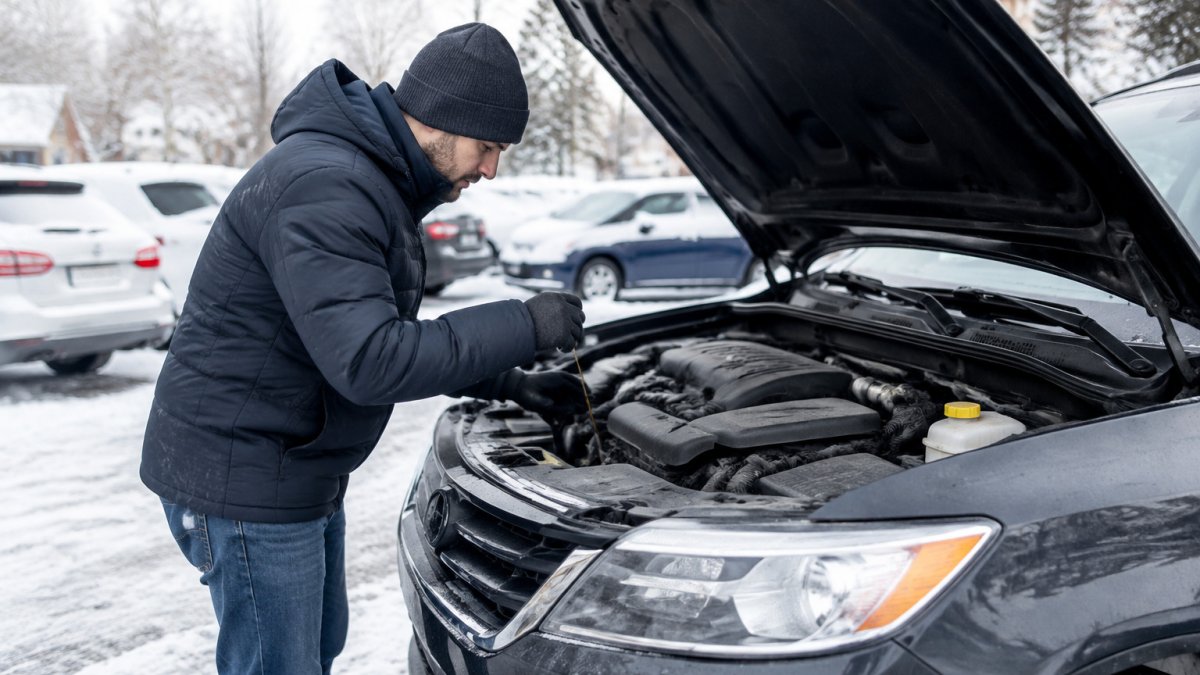
- Maintenance. Scheduled service (oil, filters, fluids, brakes) runs on a predictable interval. Set aside a monthly reserve rather than paying in lumps when the light comes on.
- Tires. A set of four tires is a recurring cost every few years, and larger wheels and low-profile tires cost more.
- Registration and taxes. Sales tax is typically collected at purchase, and registration renews periodically. Confirm the rates where you title the car.
- Depreciation. A new car loses a meaningful share of its value in the first few years. A used car has already absorbed most of that hit, which is one reason it is often the practical first-car choice.
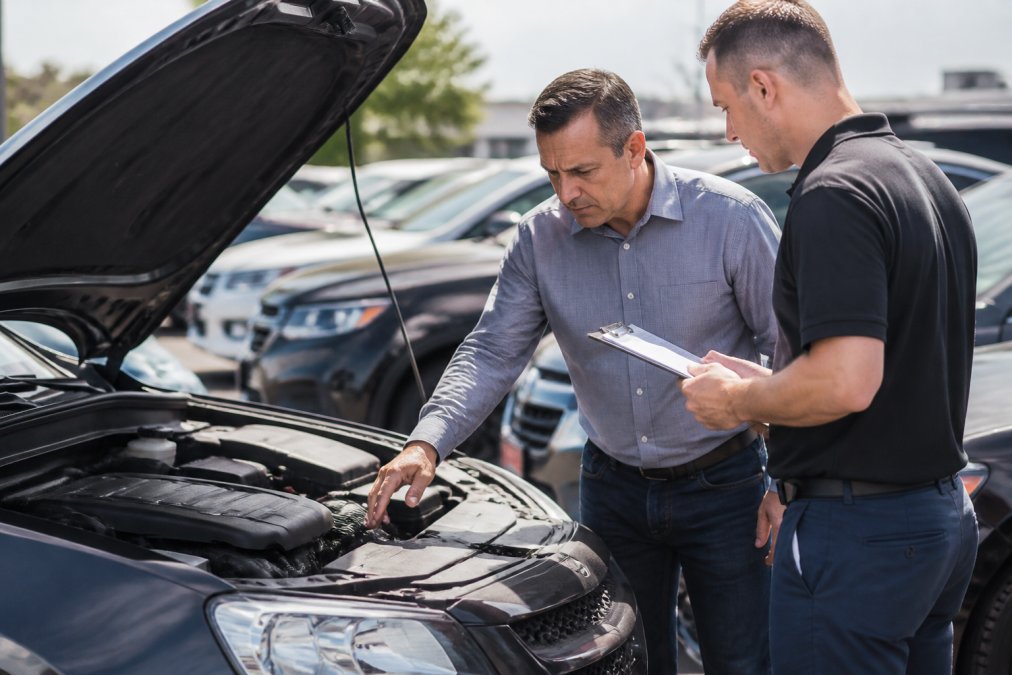
- Repairs. Wear items and sensors are the common surprises. A pre-purchase inspection on a used car is the cheapest insurance you can buy against a four-figure repair.
| Cost Category | Typical Trigger | How to Plan |
|---|---|---|
| Insurance | Monthly premium | Get VIN-specific quotes before signing |
| Maintenance | Scheduled service | Set aside a monthly reserve |
| Fuel | Weekly fill-ups | Estimate from your commute, not the window sticker |
| Tires | Every few years | Budget for a full set, not one tire |
| Registration and taxes | Annual renewal plus purchase | Confirm state rates before you title |
| Repairs | Wear and sensors | Require a pre-purchase inspection on used cars |
The Test Drive and Dealership Visit: What to Expect
A test drive should last at least 20 minutes and include highway merging, braking from speed, and a parking maneuver. Check comfort, visibility, and acceleration on the route you actually drive daily.
At the dealership, the visit unfolds in four predictable stages. Knowing them in advance is what keeps you from signing something you did not plan for.
- The lot walk and trade-in appraisal. A salesperson will look at your trade-in and may ask for the keys and title. Get the appraisal in writing before you discuss the new vehicle's price, bundling the two is how buyers lose track of what they are actually paying.
- The test drive and negotiation. Agree on the out-the-door price, not the monthly payment. The out-the-door number includes sales tax, title, registration, and dealer fees, and it is the only figure you can compare across dealerships.
- The finance and insurance (F&I) office. This is where the paperwork happens and where most first-timers get surprised. The F&I manager will present the contract, then offer optional products: extended warranties, paint and fabric protection, gap insurance, tire-and-wheel coverage, and credit insurance. All of these are optional. You can decline any of them and still buy the car.
- Signing and delivery. Review every line of the buyer's order and the retail installment contract. Confirm the APR, the loan term in months, the down payment, and the total of payments, not just the monthly figure.
Pressure tactics follow a recognizable pattern: the "today only" price, the manager who "needs to approve" a deal, and the four-square worksheet that mixes payment, term, down payment, and trade-in so you cannot see which lever moved. The counter is simple, ask for the numbers in writing, take photos of the worksheet, and be willing to leave. A deal that disappears when you walk away was not a deal.
Before you drive off, confirm the dealer has handled the title and registration paperwork or given you a clear timeline for doing it yourself, and that your insurance is active on the vehicle as of the delivery date.
Get Pre-Qualified and Start Your First Car Search
Pre-qualification is the step that turns browsing into buying, and it takes minutes rather than hours. Buy & Buy Auto Sales offers financing options regardless of credit history, flexible down payments, and no hidden fees, so you know your terms before you walk the lot. How to get pre-approved for a car loan explains what lenders need. Get started with Buy & Buy Auto Sales and drive home in your first car with confidence.
Frequently Asked Questions
What are the steps involved in buying your first car?
The process runs in a clear order: set a monthly budget, check your credit and get pre-qualified for an auto loan, research models and compare new versus used, test drive your shortlist, negotiate the out-the-door price, arrange insurance, and sign the paperwork. Doing financing before you shop gives you a real monthly payment target. The average new-vehicle financing amount reached $43,899 in Q1 2026, according to Edmunds, so knowing your number first keeps you from overextending.
How much should I spend on my first car relative to my annual income?
A common guideline is to keep total car expenses, including the monthly payment, insurance, fuel, and maintenance, at 15% to 20% of your monthly income, per Arrowhead Credit Union. If you take home $4,000 a month, that means roughly $600 to $800 for everything car-related, not just the loan. Use that ceiling to back into a purchase price, and leave room for the hidden costs of car ownership like registration and repairs.
Can I buy a car with no credit history?
Yes. Buying a car with no credit history is common for first-time buyers, and lenders look at other signals such as proof of income, employment stability, a down payment, and a co-signer if you have one. A larger down payment lowers the lender's risk and can improve your terms. Start by getting pre-qualified so you know your realistic budget before you visit a dealership.
What documents are needed to buy a car at a dealership?
Bring a valid driver's license, proof of income such as recent pay stubs, proof of residence like a utility bill, proof of insurance, and your down payment. If you are trading in a vehicle, bring its title and registration. Having these ready speeds up financing and paperwork, and it helps you avoid a second trip to the dealership.
Is it better to pay cash or finance a first vehicle?
It depends on your situation. Paying cash avoids interest and keeps you debt-free, but it ties up savings you may need for insurance and repairs. Financing builds payment history, which matters if you are buying a car with no credit history, and it keeps cash available for the hidden costs of car ownership. Compare the interest rate and loan term against what your cash could otherwise do.
What is the $3,000 rule for cars?
The $3,000 rule is a budgeting guideline suggesting you keep roughly $3,000 set aside for a car purchase or for maintenance and repairs. For a first car, it works best as a cushion: a down payment plus a repair fund so an unexpected fix does not derail your budget. Treat it as a starting point, not a hard number, and adjust it to your income and the vehicle's condition.
Your first car purchase does not have to be a stress test. Buy & Buy Auto Sales helps first-time buyers get pre-qualified in minutes, choose from quality pre-owned vehicles, and finish the paperwork without surprises. Apply now and get behind the wheel faster.