 How-to
7 Used Car Checks for Ohio Winter Driving
Last Updated: November 18, 2026
Quick Summary
To choose a used car winter commuter in Ohio, run a pre-purchase inspection that checks tires, battery, fluids, rust, and brakes before you sign. Prioritize winter tires over AWD, and reject any car with structural rust or flood branding. A used car winter purchase should start with a disciplined inspection, not a hopeful guess.
- Measure tire tread with a quarter test and replace worn tires before winter.
- AWD helps you accelerate but does nothing to shorten braking distance on ice.
- Frame rail corrosion is a structural safety issue and a walk-away signal.
- A battery over four or five years old is a likely near-term replacement cost.
- A seller who resists an independent mechanic inspection is telling you something.
Table of Contents
- Start With a Used Car Pre-Purchase Inspection Checklist
- AWD vs 4WD for Winter Driving: What Ohio Commuters Need
- Winter Tires vs All-Season Tires: Which Belongs on Your Used Car
- How to Check a Used Car for Rust and Road-Salt Damage
- Battery, Brakes, and Fluids: Cold-Weather Starting Checks
- Visibility and Emergency Gear for Snowy Roads
- Test Drive and History Checks Before You Sign
- Get Pre-Qualified for a Winter-Ready Used Car at Buy & Buy Auto Sales
- Frequently Asked Questions
Start With a Used Car Pre-Purchase Inspection Checklist
Learning how to choose a used car winter commuter in Ohio starts with one shift in mindset: you are not shopping for a car, you are shopping for a winter commuter.
A used car pre-purchase inspection checklist is a structured list of mechanical, cosmetic, and documentation checks you complete before signing. It covers tires, battery, fluids, rust, brakes, and history reports, and it exists to catch winter-specific problems while you still have use. A disciplined inspection takes time well spent before you sign.
Work through these in order, and treat each item as a pass/fail gate rather than a maybe:
- Tires: measure tread depth with a tread-depth gauge or the quarter test (see the tire section below). Tread that is worn down is a reason to replace the tires before winter. Check the DOT date code on the sidewall, the last four digits are the week and year of manufacture. Older tires should be checked carefully, because rubber hardens and loses grip over time.
- Battery: read the age sticker and inspect terminals for white or green corrosion. Ask whether the car has been sitting; a discharged battery that was jump-started repeatedly may be near failure.
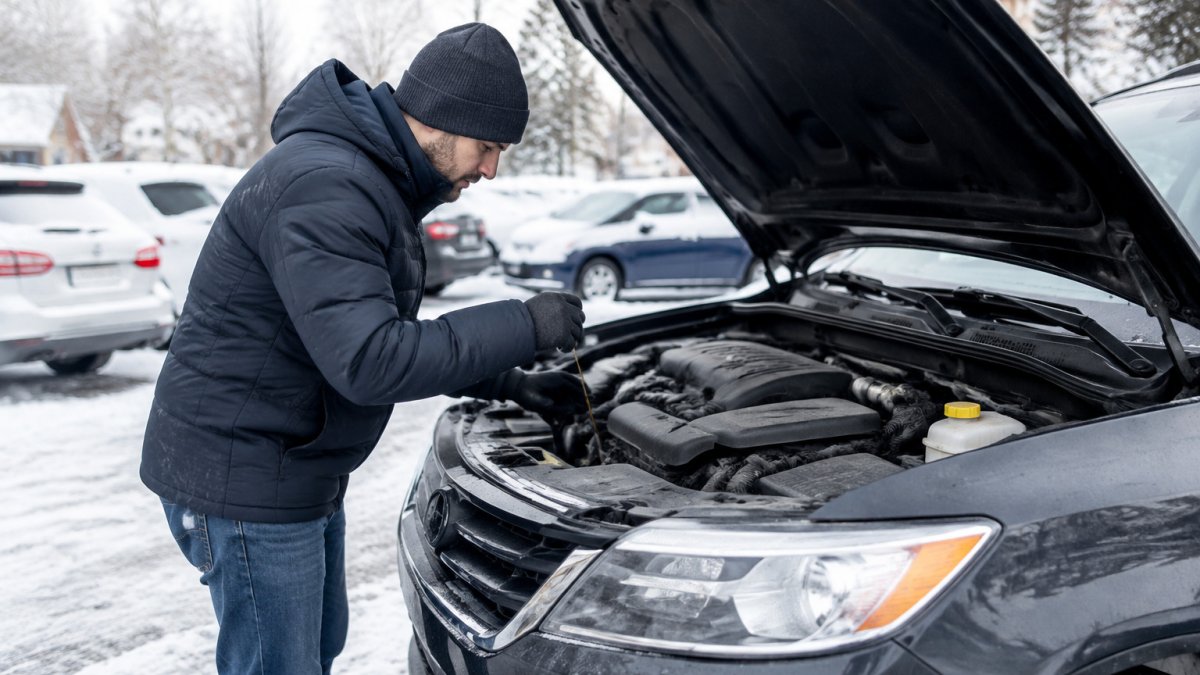
- Fluids: confirm antifreeze strength with a hydrometer or test strip , check oil level and color, and verify the washer fluid is winter-rated. Look for coolant leaks at the radiator, hoses, and water pump.
- Rust: inspect rocker panels, wheel wells, brake lines, frame rails, and the underbody (see the dedicated rust section below). Surface rust on exhaust parts is normal; structural corrosion is a walk-away.
- Brakes: measure pad thickness (replace under 3/32 inch), check rotor condition for scoring or a lip at the edge, and look for seized calipers. A pulsating pedal on the test drive points to warped rotors.
- Wipers and glass: test for streaking, check for cracks or chips in the windshield (especially in the driver's line of sight), and confirm the defroster blows hot air on both the windshield and rear glass.
- History report: confirm no flood branding, no salvage title, and a clean ownership chain. A flood-branded car can hide electrical and corrosion problems that surface months later.
- Maintenance records: verify scheduled service was done, especially transmission fluid, coolant, and brake fluid.
Watch out: a seller who resists a pre-purchase inspection by an independent mechanic is telling you something.
If you want the full walkthrough beyond winter checks, our guide on what to check when buying a used car covers the complete step-by-step process.
AWD vs 4WD for Winter Driving: What Ohio Commuters Need
All-wheel drive sends power to all four wheels automatically, while four-wheel drive uses a selectable transfer case for low-range torque, and front-wheel drive powers only the front axle. For most commuters dealing with snowy roads and icy roads, the honest answer is that front-wheel drive with good tires handles everyday winter weather fine.
Here is how the three compare on the factors that actually decide a winter purchase:
| Drivetrain | Best For | Winter Strength | Trade-Off |
|---|---|---|---|
| Front-wheel drive | Daily commuting, errands | Predictable, cheaper to maintain | Less grip on steep, unplowed grades |
| All-wheel drive | Mixed commuting, hilly routes | Automatic traction in snow and rain | Added weight, lower fuel economy |
| Four-wheel drive | Deep snow, rural roads | Maximum low-speed traction | Heavier, costlier to service |
A common mistake is treating AWD as a substitute for winter tires. It is not. All-wheel drive helps you accelerate; it does nothing to shorten braking distance on ice. If you are weighing a used SUV for a Columbus commute, our breakdown of whether used SUVs are worth buying in Columbus digs into the local math.
Winter Tires vs All-Season Tires: Which Belongs on Your Used Car
For used car winter driving, winter tires use a softer rubber compound and deeper tread sipes that stay flexible in freezing temperatures, while all-season tires harden as the mercury drops and lose grip. The practical rule: if you commute daily through Ohio winter conditions, winter tires are worth the swap.
All-season tires are the sensible default for buyers who mostly drive cleared roads and want one set year-round. They last longer and cost less upfront. Winter tires win on icy roads, packed snow, and any morning where the temperature sits well below freezing, because the compound keeps its traction instead of turning brittle.
Check tread depth with a quarter test: insert a quarter into the groove with Washington's head down. If the top of his head is visible, the tire is worn and needs replacing before winter. Also run your hand across the tread to feel for uneven tire wear.
How to Check a Used Car for Rust and Road-Salt Damage
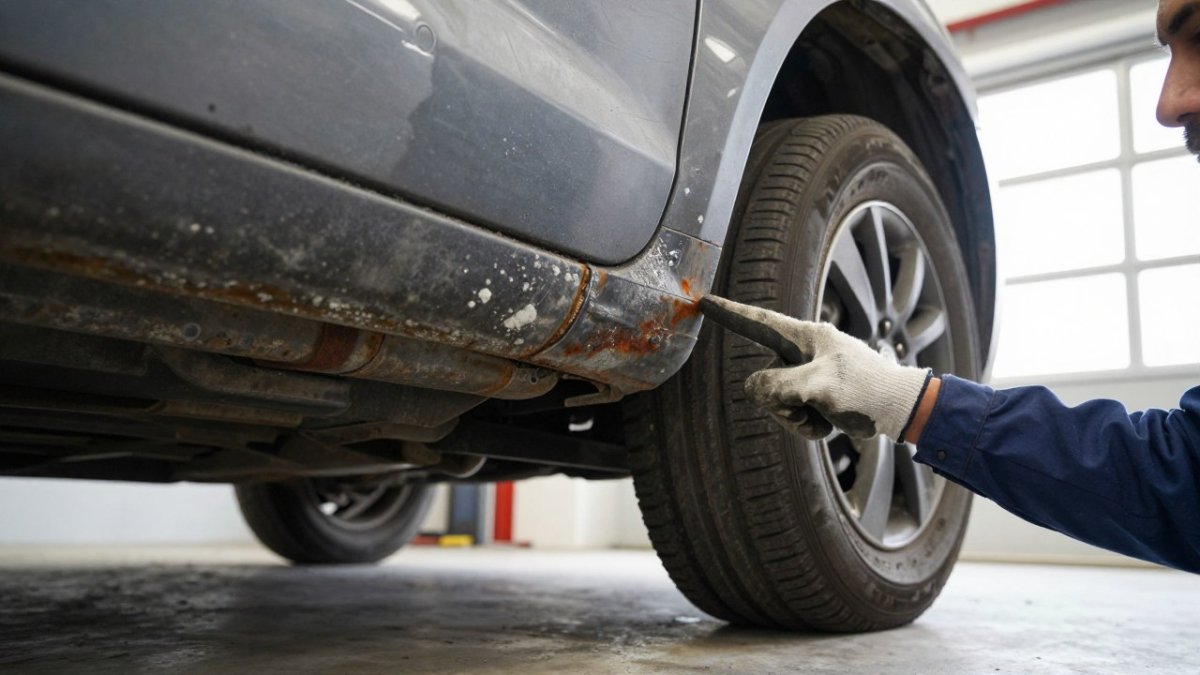
Road salt is the quiet killer of used cars in this region, and underbody corrosion is where it does the most damage.
Bring a flashlight and get low, or ask for the car on a lift. Inspect these areas in this order:
- Frame rails and subframe: look for flaking metal, holes, or soft spots you can push through with a screwdriver. This is the walk-away zone, frame corrosion is a structural safety issue and usually not worth repairing.
- Brake lines: salt attacks the steel lines that run along the underbody. Look for pitting, weeping fluid, or lines that feel spongy when you press them. A brake line that fails in winter is a genuine emergency.
- Rocker panels and the bottom edge of doors: salt spray collects here and sits. Tap along the panel with a screwdriver handle, a dull thud instead of a sharp tap can mean hidden rot under the paint.
- Rear wheel arches: the classic rust-through spot. Check the inner lip as well as the outer surface.
- Suspension components: control arms, strut towers, and sway bar links. Surface rust is common; deep pitting or flaking is not.
- Exhaust: surface rust on the pipes and muffler is normal and not a deal-breaker. Rust-through holes that affect noise or emissions are.
Watch out: a fresh coat of undercoating or black spray paint on the underbody can hide active rust. If the coating looks newer than the rest of the car, or if it is peeling at the edges, probe underneath it rather than trusting the surface.
Surface rust on exhaust components is normal. Rust that has eaten into structural metal is a walk-away signal, no matter how clean the paint looks. Pay attention to the rear wheel arches and the bottom edge of the doors, where salt spray collects and sits.
Battery, Brakes, and Fluids: Cold-Weather Starting Checks
Cold-weather starting is where weak batteries fail, so check the battery's age sticker and inspect the terminals for corrosion before you buy. A battery over four or five years old is a likely near-term replacement, and that is a cost you should factor into your budget.
Brakes deserve a close look too. Uneven braking or a pulsating pedal can point to warped rotors or seized calipers, both of which winter road salt accelerates. For fluids, confirm the antifreeze is mixed to the right strength for freezing temperatures and check that the cooling system has no leaks. Washer fluid should be a winter-rated formula, not the summer blue stuff that freezes on the glass.
For a deeper method on vetting overall reliability, our guide on checking used car reliability before you buy walks through the mechanical checks in detail.
Visibility and Emergency Gear for Snowy Roads
Windshield visibility is a safety system, not a convenience, and it starts with wipers that clear the glass without streaking. Test the wipers on a dry windshield, look for cracks in the glass, and confirm the defroster blows hot air on both the windshield and rear glass.
Then stock the car for the season:
- Ice scraper and snow brush
- Jumper cables or a portable jump pack
- A bag of sand or kitty litter for traction
- Blanket, gloves, and a warm layer
- Flashlight and spare batteries
Test Drive and History Checks Before You Sign
A vehicle history report is your first filter against hidden winter damage, and it should show no flood branding, no salvage title, and a clean ownership chain. Run the report before the test drive, not after you have fallen for the car.
On the drive itself, take it somewhere you can feel the suspension and brakes properly. Listen for clunks over bumps, feel for pulling to one side, and test the brakes at moderate speed. If you are shopping on a tight budget, our article on whether cheap used cars are worth buying explains what to check first before you commit.
Get Pre-Qualified for a Winter-Ready Used Car at Buy & Buy Auto Sales
The car that handles winter well is usually the one that passed a thorough inspection, not the one with the most features. That is the whole argument here: preparation beats badges, and a careful pre-purchase inspection beats a hopeful guess every time.
If your credit history has made financing feel like a wall, we built our process around that concern. You can start by getting pre-approved for a car loan in Columbus and shopping with a real budget in hand.
Winter will find every weak battery and worn tire on the lot, so the buyers who inspect first are the ones who stay on the road. Buy & Buy Auto Sales helps Columbus drivers skip the guesswork with financing options regardless of credit history, no hidden fees, and down payment flexibility built into flexible terms. Get started with Buy & Buy Auto Sales and drive home a winter-ready vehicle with confidence.
Frequently Asked Questions
What should I inspect on a used car before buying it for winter?
Focus on the parts winter stresses most: tire tread depth and even wear, battery condition and cold-weather starting, brakes, antifreeze strength, wipers and washer fluid, and underbody rust. A used car pre-purchase inspection checklist should also cover the heater and defroster, lights, and suspension. If you are comparing drivetrains, confirm whether the vehicle is AWD, 4WD, or front-wheel drive and whether the tires match the conditions you drive in.
Are winter tires worth it in Ohio?
For many Ohio drivers, winter tires are worth it if you commute early in the morning, face untreated snowy roads, or want shorter braking distances on ice. Winter tires vs all-season tires comes down to rubber compound and tread design: winter tires stay softer in freezing temperatures and grip better on snow and ice, while all-season tires last longer and cost less. If you rarely drive in deep snow, a good set of all-season tires with healthy tread may be enough.
Is front-wheel drive enough for snowy roads?
Front-wheel drive is enough for many commuters in typical winter weather, especially with winter tires and careful driving. AWD and 4WD add capability for steep driveways, unplowed roads, and heavy snow, but they do not replace good tires or safe following distance. If you mostly drive cleared city streets, a front-wheel-drive used car with winter tires can be a practical, budget-friendly choice.
How can I tell if a used car has rust or winter damage?
Check the underbody, rocker panels, wheel wells, and frame for bubbling paint, flaking metal, and orange-brown corrosion. Road salt accelerates rust, so look closely at brake lines, fuel lines, and suspension components. Also inspect the windshield for pitting, the wipers for wear, and the battery tray for corrosion. A vehicle history report and maintenance records help confirm whether the car was driven through salty winters and how well it was cared for.