 How-to
7 Steps to Check Used Car Reliability Before You Buy
Last Updated: October 29, 2026
Quick Summary
Checking used car reliability starts with the VIN, which unlocks build details, recall status, and title brands before you ever turn a key. From there, pull a vehicle history report, work through a four-zone inspection, scan for trouble codes, and test drive at least 15 minutes. A pre-purchase inspection by an independent mechanic adds another perspective.
- Run the free NHTSA VIN lookup to catch open safety recalls and title brands.
- A clean history report rules cars out, not in, since unreported damage stays hidden.
- Measure tire tread with a quarter and be wary of tires older than six years.
- Clear OBD-II codes, drive 20 minutes, and rescan; codes that return are real problems.
- Dealers selling more than five used vehicles in 12 months must post a Buyer's Guide.
Table of Contents
- Start With the VIN: The Foundation of Used Car Reliability
- The Vehicle History Report Importance Most Buyers Underestimate
- Your Used Car Inspection Checklist: What to Check and How
- Use an OBD-II Scanner to Read the Car's Own Diagnostics
- The Test Drive: Where Reliability Ratings Meet Reality
- Used Cars With Warranty: How Coverage Lowers Your Risk
- Private Seller vs. Dealer Red Flags: Know Who You're Buying From
- Get Pre-Qualified at Buy & Buy Auto Sales Today
- Frequently Asked Questions
Start With the VIN: The Foundation of Used Car Reliability
Checking used car reliability starts with the VIN. That 17-character code unlocks the vehicle's build details, recall history, and title records before you ever turn a key. Run the VIN first, because everything else you learn later depends on it.
A VIN check is the fastest way to catch a car that looks clean but isn't. It ties the car to its real history, not the seller's story.
Here's what to pull:
- Build sheet: trim, engine, and factory options. Confirms the car is what it claims to be.
- Recall status: open safety recalls through NHTSA's free VIN lookup.
- Title brand: salvage, flood, or lemon history that follows the car forever.
Skip this step and you're guessing. A clean VIN doesn't guarantee a good car, but a dirty one ends the conversation.
The Vehicle History Report Importance Most Buyers Underestimate
The vehicle history report importance is simple: it's your paper trail for accidents, odometer rollback, and title status. No report is perfect, but a missing one is a red flag on its own.
What a History Report Reveals (and What It Hides)
Reports show reported accidents, service records, ownership transfers, and title brands. They hide anything that was never reported, like minor fender benders paid in cash or DIY repairs.
Watch out: a clean report is not proof of a clean car. Use it to rule cars out, not to rule them in.
Your Used Car Inspection Checklist: What to Check and How
A used car inspection checklist covers four zones: exterior, interior, under the hood, and underneath. Work through each one in order, write down what you find, and photograph anything questionable. The goal is not to become a mechanic, it's to gather enough evidence to walk away from a bad car or negotiate a fair price on a good one.
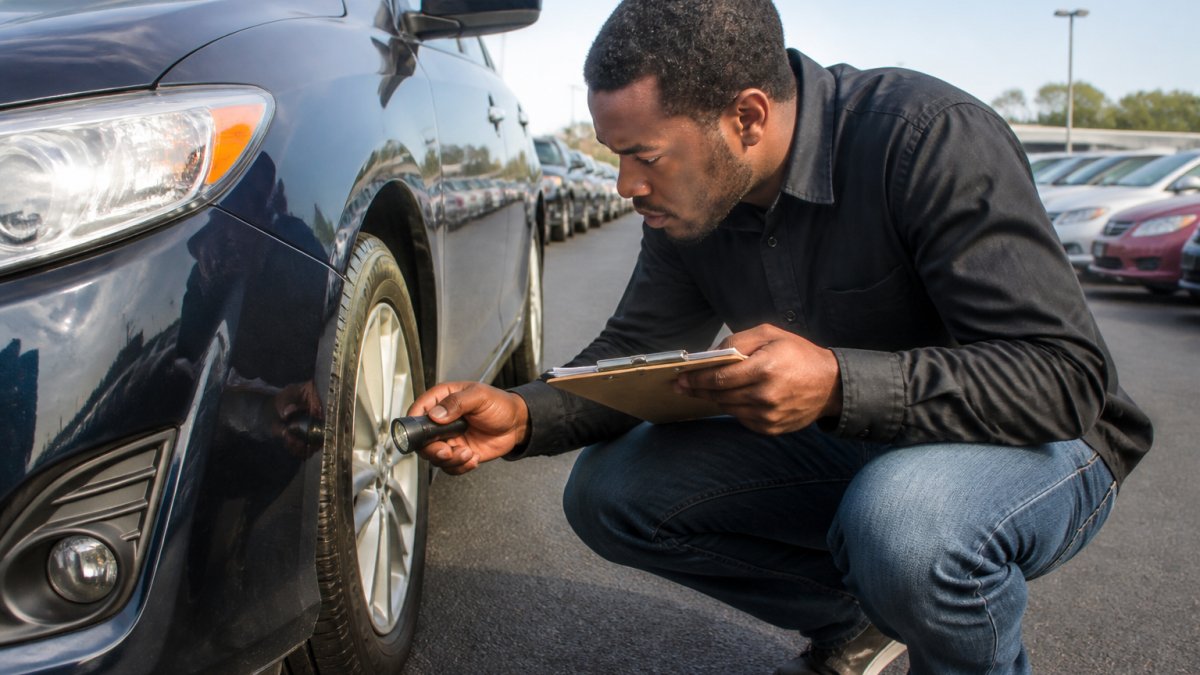
Exterior: Panel Gaps, Paint, Glass, and Tires
Start outside in good daylight. Run your hand along panel gaps between doors, fenders, and the hood, uneven spacing or a gap that widens toward one end hints at past collision repair.
Check glass for chips and cracks, especially in the driver's line of sight. Inspect every light, headlights, taillights, turn signals, brake lights, for moisture inside the lens, which points to a failed seal.
Tires tell a reliability story on their own. Measure tread depth with a quarter: insert it into the tread groove with Washington's head down, and if the top of his head is visible, the tire is at or near the 2/32-inch legal minimum.
Look for rust along wheel wells, rocker panels, and the frame underneath the doors. Surface rust is cosmetic; bubbling paint or soft metal is structural.
Interior: Electronics, Smells, and Wear Patterns
Inside, test every electrical component: windows, locks, mirrors, radio, climate controls, heated seats, and every dashboard warning light during the bulb-check at startup. A cluster lit up like a Christmas tree that doesn't clear after a few seconds is a walk-away sign.
Smell matters. A musty odor points to water intrusion, check the trunk floor and under the floor mats for dampness or rust. A strong air-freshener smell can mask smoke, mildew, or spilled fluids.
Wear patterns are a mileage check. A pedal rubber worn smooth, a driver's seat bolster collapsed, or a shifter knob polished bare on a car showing 40,000 miles is a mismatch worth questioning. Compare the wear to the odometer, not the seller's story.
Under the Hood: Fluids, Belts, and Leaks
Open the hood with the engine cold. Check the oil on the dipstick, dark, gritty oil suggests skipped maintenance; milky or frothy oil suggests coolant mixing, which is a serious engine problem. Look at the coolant reservoir: low, rusty, or oily coolant is a red flag.
Inspect belts for cracks, glazing, or fraying, and hoses for bulges or soft spots. Look for oil or coolant stains on the engine block, around valve covers, and under the radiator. Freshly cleaned engine bays can hide leaks, ask when the car was last cleaned and why.
Start the engine and listen. A rough idle, ticking, or knocking that doesn't settle after warm-up points to bigger problems. Blue smoke on startup suggests oil burning; white smoke that doesn't dissipate suggests coolant burning.
Underneath: The Zone Most Buyers Skip
Bring a flashlight and lie down or use a mirror. Look for fluid drips under the engine, transmission, and differential. Check the frame rails and subframe for rust-through, cracks, or weld repairs. Inspect the exhaust for holes, patch jobs, or hangers held up with wire. Look at CV boots for tears and grease sling.
If you can't get underneath safely, ask the seller to put it on a lift or take it to a shop for a quick look. A pre-purchase inspection by an independent mechanic can provide another perspective on the car.
For a deeper walkthrough, see our full guide on what to check when buying a used car.
Work through the inspection in four zones, in this order.
| Zone | What to check | Watch for |
|---|---|---|
| Exterior | Panel gaps, paint, glass, lights, tires, rust | Uneven gaps, overspray, mismatched tires, tires older than six years |
| Interior | Electronics, smells, wear patterns | Warning lights that stay on, musty odor, wear that mismatches mileage |
| Under the hood | Fluids, belts, hoses, leaks, engine sound | Milky oil, low or oily coolant, cracks, blue or white smoke |
| Underneath | Fluid drips, frame rails, exhaust, CV boots | Rust-through, cracks, patch jobs, torn boots |
Use an OBD-II Scanner to Read the Car's Own Diagnostics
An OBD-II scanner plugs into the port under the dash and reads stored trouble codes. It reads stored trouble codes.
Scan before the test drive, not after. Then clear the codes, drive 20 minutes, and rescan. Codes that come back are real problems. Codes that vanish may have been wiped to hide a check engine light.
This is the DIY diagnostic step most buyers skip. Don't be most buyers.
The Test Drive: Where Reliability Ratings Meet Reality
A test drive confirms what the paperwork and scanner can't. Drive at least 15 minutes on streets and highway. Listen for transmission performance issues, suspension wear, and brake noise.
Test these specifically:
- Transmission: smooth shifts, no slipping or hard clunks.
- Brakes: no grinding, no pulling.
- Steering: no vibration at highway speed.
Cold-start the engine first. A rough idle or blue smoke on startup points to bigger problems.
Used Cars With Warranty: How Coverage Lowers Your Risk
Used cars with warranty coverage turn a surprise repair bill into a known cost. That's the whole point: you're buying protection against the unknown, and the value of that protection depends entirely on what the contract actually pays for.
What Warranty Coverage Actually Pays For
Read the contract, not the brochure. Every plan has four levers that determine its real value:
- Covered components: "Powertrain only" means engine, transmission, and drive axles. It does not cover the water pump, alternator, AC compressor, or electronics, the parts that fail most often on older cars.
- Exclusions: Wear items (brakes, tires, clutch, belts, hoses) are almost always excluded. So are pre-existing conditions and damage from neglect.
- Deductible: A $100 deductible per visit is very different from a $500 deductible per component.
- Term and mileage cap: A 3-year/36,000-mile plan on a car you'll drive 15,000 miles a year runs out in about two and a half years.
The Financial-Risk Math Most Buyers Skip
A practical way to frame it: estimate the likely annual repair cost for the model you're considering (independent repair-data sources publish average repair costs by model year), then compare that to the warranty premium. If the warranty costs more than the expected repairs over its term, you're buying peace of mind, not savings, which is fine, as long as you know which one you're buying.
CPO vs. Third-Party: How to Compare
Weigh the coverage against the car's reliability ratings. A dependable model with a solid warranty is a safer bet than a shaky one with none. Our breakdown of CPO vs. third-party coverage walks through the tradeoffs.
Private Seller vs. Dealer Red Flags: Know Who You're Buying From
Private sellers can offer lower prices, but they carry more risk. Dealers face more accountability, including federal rules. Per the FTC Used Car Rule, dealers selling more than five used vehicles in 12 months must post a Buyer's Guide on the window.
Red flags with private sellers:
- No title in hand, or a title that isn't in the seller's name.
- Pressure to pay cash and skip paperwork.
- Refusal to allow a pre-purchase inspection.
Red flags with any seller:
- Odometer rollback signs, like wear that doesn't match the mileage.
- A salvage title sold as clean.
- No service records at all.
Mileage matters too. Consumer Reports guidance suggests benchmarking against 20,000 miles per year, and asking hard questions when a car runs far above or below that. For a closer look at seller types, read our comparison of dealership vs. private seller, plus tips on finding a reputable dealership.
Get Pre-Qualified at Buy & Buy Auto Sales Today
Knowing how to check used car reliability puts you ahead of most shoppers. The next step is lining up financing so you can move fast when the right car shows up.
At Buy & Buy Auto Sales, we offer financing options regardless of credit history, no hidden fees, down payment flexibility, and flexible terms. You can get pre-qualified in minutes and get behind the wheel faster.
Get started with Buy & Buy Auto Sales and get pre-approved for your car loan today.
Frequently Asked Questions
What is the best way to check a used car's history?
Start with a VIN check through a vehicle history report service, then cross-reference it with NHTSA recall data and any service records the seller provides. For details about applicable requirements, consult the official source. Look for accident history, salvage title branding, odometer rollback flags, and title status. A clean report supports used car reliability, but it is not a substitute for a hands-on inspection.
How many miles is too many for a used car?
A vehicle with mileage that seems inconsistent with its age or history should prompt questions. High mileage alone does not disqualify a car if service records show consistent maintenance. What matters more is whether the maintenance schedule was followed and whether common failure points for that model were addressed. Compare the odometer reading against the age of the car to spot inconsistencies.
Do vehicle history reports show all accidents?
No. Reports capture what was documented through insurance claims, police reports, and service visits, so accidents repaired privately or never reported can stay hidden. That is why the vehicle history report importance is real but limited: use it to screen for salvage title branding, odometer rollback, and major claim activity, then confirm with a physical inspection. Check panel gaps, paint mismatch, and frame condition yourself or with a mechanic before you commit.
What should I look for during a used car inspection?
Work through a used car inspection checklist covering exterior rust and panel alignment, interior wear and dashboard warning lights, fluid leaks and coolant condition under the hood, tire tread depth, and brake and exhaust system condition. Plug in an OBD-II scanner to pull stored codes. Then take a test drive that includes highway speeds and stop-and-go traffic to assess transmission performance and suspension wear. A pre-purchase inspection by an independent mechanic is the final safeguard.