 How-to
Used Auto Cars for Sale: How to Shop With Confidence
Quick Summary
Used auto cars for sale can offer more vehicle for the money than new cars, because a pre-owned vehicle has already taken its steepest depreciation hit. Quality varies widely, so shoppers should set a total budget, check the history report, get a full inspection, and read the Buyers Guide before signing.
- Set a total budget that includes taxes, title and registration fees, and add-ons.
- Ask the seller to start the car cold and watch for a check-engine light that stays on.
- Get an independent pre-purchase inspection from a mechanic you choose, not one the seller recommends.
- Compare offers on the out-the-door price, not the sticker price.
- Check the FTC Buyers Guide to confirm whether the car comes with a warranty or is sold as is.
Table of Contents
- Why Used Auto Cars Are Worth a Close Look
- Step-by-Step: How the Used Car Buying Process Works
- Used Car Inspection Checklist: What to Check Before You Buy
- Reading a Used Car History Report Before You Sign
- Used Cars With Warranty: What Coverage to Look For
- Questions to Ask When Buying a Used Car
- Your Next Step: Browse Our Pre-Owned Inventory and Get Pre-Qualified
- Frequently Asked Questions
Why Used Auto Cars Are Worth a Close Look
Used auto cars for sale can give shoppers more vehicle for the money than a new car does. A pre-owned vehicle has already taken its steepest depreciation hit, so its price can reflect a real value gap. The catch is that quality varies widely from one car to the next. Knowing what to check turns a risky purchase into a smart one.
The U.S. used market is large and active. Cox Automotive's 2026 forecast expects used-vehicle sales to dip slightly, falling 0.9% to 38.3 million units. Even with a small decline, that's a massive pool of cars to choose from. SUVs alone made up 50.3% of used-car sales volume in February 2026, according to MarketCheck monthly used-car market data, February 2026.
Certified pre-owned (CPO) vehicles are one segment to watch, and inventory can move quickly, so it pays to shop with a plan.
Step-by-Step: How the Used Car Buying Process Works
Buying a used car goes faster when you follow a clear sequence. Start by setting a total budget that includes taxes, title and registration fees, and any add-ons. Then get your financing lined up. Buy & Buy Auto Sales offers financing options regardless of credit history, and you can get pre-qualified in minutes.
Next, narrow your list to two or three vehicles that fit your needs. Our how long the car buying process takes guide walks through each stage so you can plan your timeline. Commuters often focus on fuel economy and reliability, while families may prioritize space. Once you've picked a car, schedule a test drive and a full inspection. Then review the history report, confirm the price, and read every line of the paperwork before you sign.
The Federal Trade Commission's Used Car Rule requires dealers to display a Buyers Guide on each used vehicle they offer (the FTC). That guide states whether the car comes with a warranty or is sold "as is," so check it carefully. Our team at Buy & Buy Auto Sales is committed to a hassle-free buying experience, so you can move through each step with confidence.
Here is a quick summary of the buying process, step by step.
| Step | What to do | Timing |
|---|---|---|
| Set your budget | Include taxes, title and registration fees, and add-ons | Before you shop |
| Arrange financing | Get pre-qualified; financing is offered regardless of credit history | Before you visit |
| Narrow your list | Pick two or three vehicles that fit your needs | Before the test drive |
| Test drive and inspect | Schedule a test drive and a full inspection | Before you commit |
| Review history report | Check the history report and confirm the price | Before you sign |
| Read the paperwork | Read every line and check the Buyers Guide | Before you sign |
Used Car Inspection Checklist: What to Check Before You Buy
A thorough inspection protects you from expensive surprises, and the order you do it in matters. Start with the paperwork and the cold start, then move to the mechanical checks, then the test drive. That sequence catches the problems that are cheapest to walk away from.
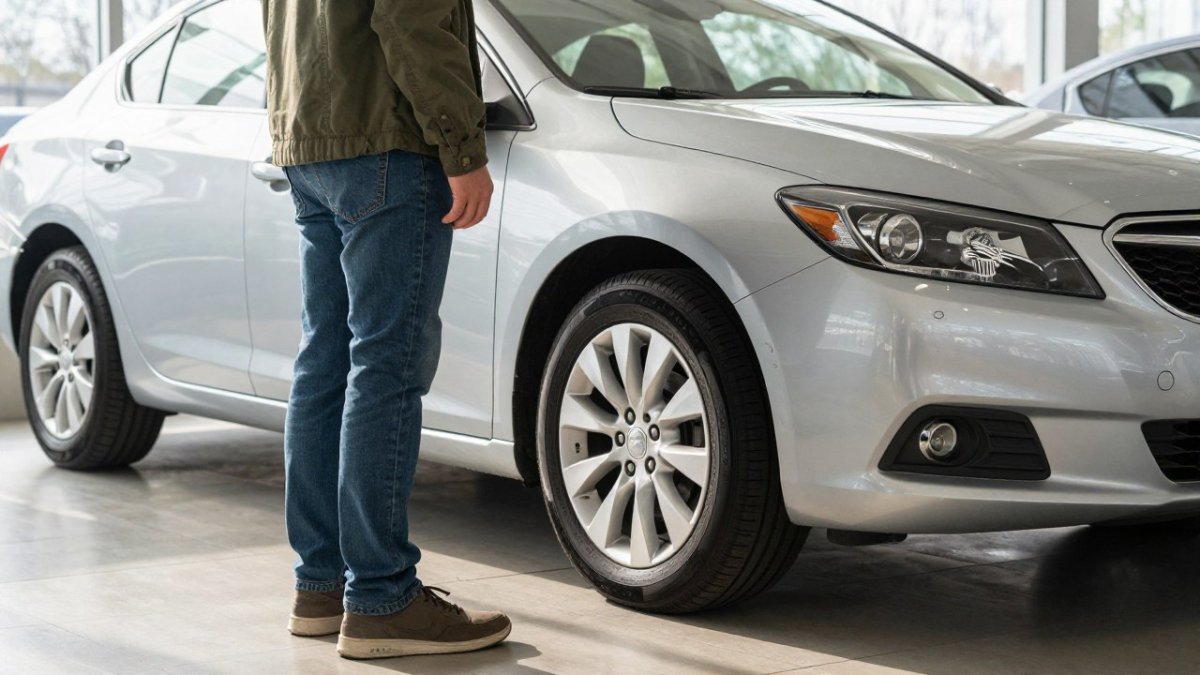
Before you touch the car, ask the seller to start it cold. A cold start reveals rough idle, blue smoke from the tailpipe, or a slow crank that a warm engine hides. Let it idle for two minutes and watch the dashboard: a check-engine light that stays on, or one that has been recently cleared, is a reason to ask for the diagnostic codes in writing.
On the exterior, check panel gaps and paint match along the fenders, doors, and hood. Uneven gaps or mismatched paint often mean past collision repair. Look at the tires for uneven wear across the tread, which can signal alignment or suspension problems, and check the DOT date code on the sidewall. Tires older than six years are a safety and replacement cost you should price into the offer.
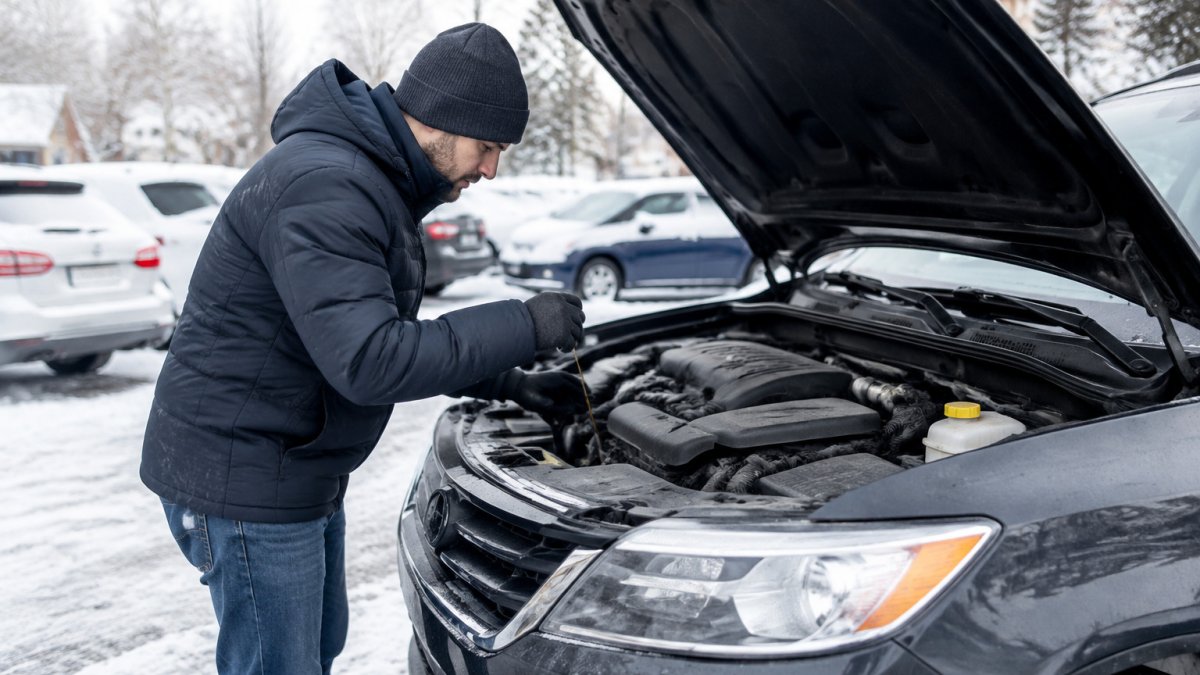
Under the hood, check the fluid levels and colors: engine oil that looks milky, transmission fluid that smells burnt, or coolant with oil in it are walk-away signs. Look for leaks under the radiator, around the valve cover, and at the rear main seal. Bring a flashlight and check the frame rails and strut towers for wrinkles or fresh undercoating that could hide rust or frame damage.
On the test drive, cover a mix of roads. Listen for squealing brakes, grinding noises, or clunks over bumps. Test the air conditioning, heat, windows, locks, and infotainment system, since small electrical faults add up. On a straight, empty road, check that the car tracks straight and the steering doesn't pull.
For an extra layer of protection, consider an independent pre-purchase inspection with a mechanic you choose, not one the seller recommends. The mechanic can spot frame damage, leaks, worn suspension components, and pending diagnostic codes that are easy to miss on a lot. Ask for the report in writing and use it in negotiation.
Watch out: a clean history report and a shiny lot are not a substitute for a lift inspection, because unreported damage and pending codes do not always show up in either.
Reading a Used Car History Report Before You Sign
A vehicle history report shows a car's past. It can reveal accident records, title problems, odometer discrepancies, service history, and the number of previous owners. Review it before you commit to any vehicle. Our article on judging used car reliability before you buy shows how to read these records alongside other signals.
Look for a clean title, consistent mileage readings across records, and documented maintenance. Be cautious with salvage, rebuilt, or flood-damaged titles, because those vehicles can be harder to insure and resell. A report that shows gaps in service history isn't an automatic dealbreaker, but it's a reason to ask more questions and inspect more closely.
Remember that a history report only shows what was reported. A car with no accidents on record may still have unrepaired damage, so pair the report with a physical inspection.
Used Cars With Warranty: What Coverage to Look For
Warranty coverage varies a lot among used vehicles. Some cars come with the remaining manufacturer warranty, while certified pre-owned vehicles often include an extended manufacturer-backed warranty. Others are sold with third-party warranties or no coverage at all.
When comparing options, read exactly what is covered, how long coverage lasts, and whether it applies at any licensed repair shop. Our article on CPO vs third-party coverage breaks down how these two options differ. Ask about deductibles and what items are excluded, since engine and transmission coverage is often the core of a plan. The FTC's Buyers Guide on each vehicle is the place to confirm whether a warranty is included.
Don't assume a certified label or a listing badge guarantees coverage. Verify it in writing before you sign.
Questions to Ask When Buying a Used Car
Asking the right questions up front saves time and money, and the most important one is the out-the-door price. Ask: "What is the total I'll pay today, including tax, title, registration, dealer fees, and any add-ons?" A listed price and an out-the-door price are different numbers, so compare offers on the out-the-door figure rather than the sticker.
Ask for the fee breakdown in writing, and itemize any optional add-ons so you can decline optional products. Our guide on how to avoid hidden fees when buying a car explains which charges are common and which you can refuse. If a fee is not required by law and not something you asked for, ask them to remove it or explain why it is on the contract.
Ask about the vehicle's history and whether it has been inspected, and request copies of service records. Ask whether a warranty is included, what it covers, the deductible, and whether it applies at any licensed repair shop. If you are financing, ask about the annual percentage rate, the loan term in months, the monthly payment, and any penalty for early payoff. Compare the APR and term, not just the monthly payment, because a longer term lowers the payment but raises the total interest.
Ask how the dealership handles trade-ins, and get a written quote for your current car separately from the vehicle you are buying. A trade-in offer is only a good deal if you know what your car is worth on its own. Ask whether the trade-in value is applied before or after tax, because in many states the trade-in reduces the taxable amount.
Finally, ask to see the title and the contract before you sign. Confirm the vehicle identification number on the title matches the car, check for a clean title brand, and read every line of the buyer's order. The Federal Trade Commission's Used Car Rule requires dealers to display a Buyers Guide on each used vehicle, so confirm whether the car is sold with a warranty or "as is."
Watch out: a low monthly payment can hide a long term and a high APR, so ask for the total of payments in writing before you agree to any financing.
Your Next Step: Browse Our Pre-Owned Inventory and Get Pre-Qualified
Shopping for a used car is easier when you know your budget and what to look for. Use the checklists above to compare vehicles, and get pre-qualified before you visit so you're shopping within your means.
At Buy & Buy Auto Sales in Columbus, Ohio, we offer quality pre-owned cars, financing options regardless of credit history, down payment flexibility, and flexible terms. Get pre-qualified in minutes and get behind the wheel faster. Apply Now
Frequently Asked Questions
What should I check before buying a used car?
Start with the vehicle history report, a visual inspection of body panels, tires and fluids, and a test drive on both city streets and highways. Look for warning lights, uneven tire wear, and any signs of prior accident repair such as mismatched paint. Ask for maintenance records if the seller has them. A mechanic's pre-purchase inspection is the most reliable way to catch problems you might miss, and it is worth paying for before you commit to a purchase or financing agreement.
Do used cars come with a warranty?
Some do, and some do not. Many used cars are sold as-is, which means you may have little recourse if a problem appears after the sale. Certified pre-owned vehicles often include an extended manufacturer warranty, and some dealers offer their own limited coverage. Under the FTC's Used Car Rule, dealers must display a Buyers Guide on each used vehicle offered for sale, and that guide states whether the car comes with a warranty. Read it carefully before signing.
Can I negotiate the price of a used car?
In most cases, yes. Research the market value of the specific year, make, model, mileage and trim before you visit, so you know what comparable vehicles are listed for. Use any problems found during the inspection as leverage. Focus on the total out-the-door price, including fees, rather than only the monthly payment, since a lower payment can hide a longer loan term and higher overall cost.
How do I check a used car's history?
Request a vehicle history report using the car's Vehicle Identification Number (VIN). The report can show title records, reported accidents, odometer readings, and prior owners. Compare the report against the vehicle's condition and the seller's description. A clean report does not guarantee a problem-free car, so pair it with a physical inspection and a mechanic's review.