 How-to
Documents Needed for Used Car Financing
Table of Contents
- What Documents You'll Need for Used Car Financing
- Proof of Identity and Valid Driver's License
- Documents Needed for a Car Loan: Income Verification
- Proof of Income for Car Loan Applications
- Proof of Residence for Auto Loan Approval
- Proof of Insurance for Financed Car Purchases
- Vehicle and Trade-In Documentation
- What to Do When Documents Are Missing or Outdated
- Frequently Asked Questions
Last Updated: October 13, 2026
What Documents You'll Need for Used Car Financing
Getting approved for used car financing requires paperwork proving you can repay the loan.
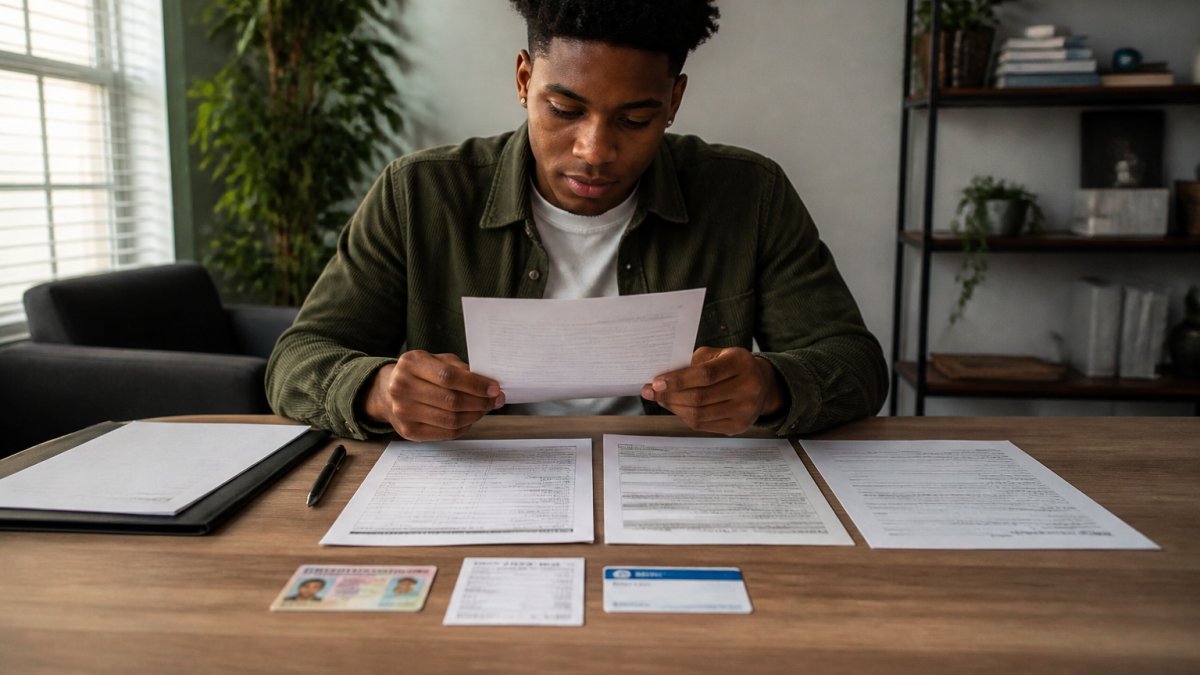
Most lenders ask for the same core set of documents. Having everything ready before you apply speeds up the process significantly.
Here's what you'll typically need:
- Proof of identity (government-issued ID)
- Valid driver's license
- Proof of income (pay stubs or bank statements)
- Proof of residence (utility bill or lease)
- Proof of insurance
Some lenders may ask for extra paperwork. Self-employed applicants often need tax returns, and co-signers need their own documentation too.
Proof of Identity and Valid Driver's License
Your government-issued ID proves who you are, and a valid driver's license is the standard form lenders accept.
Acceptable forms of ID include:
- State driver's license
- State ID card
- Passport
- Military ID
The ID must match the name on your loan application.
Lenders verify your identity to prevent fraud and check your driving record.
Keep your ID accessible, you'll need it at the dealership or when signing documents electronically.
Documents Needed for a Car Loan: Income Verification
Proof of income is the make-or-break document in used car financing. Lenders check that income is verifiable, consistent, and likely to continue, that last part is where most applications stall. Here's how lenders read income documentation and what to bring.
The baseline: W-2 employees
Bring your last two to four pay stubs. Lenders want gross income, deductions, and year-to-date earnings to calculate a monthly average. If you're salaried, one recent stub usually clears it; if you're hourly, more stubs give a cleaner average.
Lenders often divide your year-to-date gross by months worked, then compare that to your stated income. If the numbers don't line up, expect a follow-up request.
Self-employed and 1099 applicants
Self-employed applicants get tripped up most. Lenders typically want:
- Two years of personal tax returns (all schedules, signed)
- Two years of business tax returns if you file separately
- A year-to-date profit-and-loss statement you've prepared
- Three to six months of business bank statements showing deposits
Lenders often use your adjusted gross income, not gross revenue, so heavy write-offs can work against you. If your returns show modest income but your bank deposits tell a stronger story, ask about a bank-statement loan program.
Gig workers, rideshare, and delivery drivers
Platform income is verifiable if you package it correctly. Bring:
- Monthly earnings summaries from each platform (most apps let you export these)
- Bank statements showing the matching deposits
- Tax returns showing self-employment income if you've filed
- A profit-and-loss statement if you track expenses like mileage and fuel
Lenders want to see deposits hit your bank, not just a screenshot of earnings. Screenshots plus matching bank deposits are strong.
Retirees, Social Security, and fixed income
Fixed income counts. Bring:
- Social Security award letters or annual benefit statements
- Pension statements
- Annuity or retirement account statements
- Bank statements showing the deposits
Because the income is stable and ongoing, retirees often qualify with less paperwork than self-employed applicants.
Other income lenders will consider
- Alimony or child support, court order plus bank deposits showing receipt
- Rental income, lease agreements plus bank deposits
- Investment or dividend income, account statements
- Disability benefits, award letters or benefit statements
What weakens an income file
- Deposits that appear sporadically with no explanation
- Income you claim on the application that isn't supported by documents
- Tax returns that are unsigned or missing schedules
- Bank statements with large unexplained transfers
The fix is almost always the same: show the source and the deposit trail. If money lands in your account, be ready to explain where it came from and why it will keep coming.
At Buy & Buy Auto Sales, our finance team works with W-2 employees, gig workers, and self-employed buyers every week, and we'll tell you exactly which income documents will move your application forward.
Proof of Income for Car Loan Applications
Your income determines how much you can borrow. Lenders calculate your debt-to-income ratio using this information.
Employment verification letters strengthen your application.
For W-2 employees, recent pay stubs are usually sufficient.
Bonus and commission income requires documentation.
Gig economy workers (delivery, rideshare, freelance) can use:
- Bank deposits showing regular income
- Screenshots of earnings from the platform
- Tax returns showing self-employment income
- Profit-and-loss statements
The key is consistent, verifiable income. Sporadic deposits raise red flags, lenders want income that will continue.
Proof of Residence for Auto Loan Approval
Lenders verify where you live to prevent fraud and to contact you if needed.
Utility bills are the most common proof.
Lease agreements also work. If you rent, bring a signed lease with your name and address.
Other acceptable documents include:
- Mortgage statement (recent statement from your lender)
- Property tax bill (current year bill)
- Insurance policy (homeowner's or renter's insurance showing your address)
- Bank or credit card statement (recent statement with your address)
- Government mail (tax return, voter registration, or official correspondence)
The document must be dated within the last 60 days. If you've recently moved, bring a utility bill or lease showing your new address.
Proof of Insurance for Financed Car Purchases
Lenders require proof of insurance before releasing loan funds. You'll need an active policy in your name.
Auto insurance is mandatory for financed vehicles. You need at least your state's minimum coverage, and most lenders also require comprehensive and collision (Auto insurance basics, understanding your coverage).
Bring your insurance policy declaration page. This shows:
- Your name and policy number
- The vehicle being insured (or confirmation that coverage is pending)
- Coverage types and limits
- Policy dates (start and end)
- Named insured driver
If you're buying a new-to-you vehicle, you may not have insurance yet.
If you have a co-signer, their insurance isn't sufficient.
Get a quote before you visit the dealership so you can budget for total monthly vehicle expenses.
Vehicle and Trade-In Documentation
The vehicle itself requires documentation proving ownership and condition.
The vehicle title is critical.
The registration shows the vehicle is legally registered. Dealers provide this for new-to-you vehicles.
Trade-in documents include:
- Current vehicle title (in your name)
- Current registration
- Proof of insurance (showing you own the vehicle)
- Odometer reading (current mileage)
- Service records (optional but helpful)
The lender uses trade-in documents to calculate the vehicle's value, reducing the amount you need to finance.
Vehicle history reports aren't required but help.
What to Do When Documents Are Missing or Outdated
Missing paperwork doesn't kill a car loan, unmanaged missing paperwork does. The fastest approvals go to applicants who know which documents are substitutable and which aren't. Here's how to handle common gaps and protect yourself while sharing sensitive records.
First, know what's truly required vs. preferred
Lenders separate documents into two buckets:
- Hard requirements, identity, income, and residence. You can't skip these, but you can often substitute within the category.
- Soft preferences, employment verification letters, references, extra bank statements. Helpful, but not deal-breakers.
If you're missing a hard requirement, find an acceptable substitute in the same category. If you're missing a soft preference, apply anyway.
Missing or expired ID
Renew through your state DMV before you apply. Most states offer online renewal if your photo and information are current. If renewal is pending, ask the DMV for a temporary or interim document, many lenders accept it alongside your expired card.
Missing pay stubs
Your employer's HR or payroll department can reprint recent stubs or issue an employment verification letter. If you're between jobs, an offer letter plus your first pay stub can bridge the gap, and some lenders accept bank statements showing direct deposits.
Missing proof of residence
This is the easiest gap to fill because so many documents qualify:
- A recent utility bill (electric, gas, water, internet)
- A bank or credit card statement with your address
- A lease agreement or mortgage statement
- A current insurance policy showing your address
- Official government mail
If you live with family or friends and nothing is in your name, ask the homeowner for a signed letter confirming you live there, paired with a utility bill or lease in their name showing the shared address.
Recently moved
Bring documents from both addresses, an old utility bill showing your previous residence and new mail showing your current one. This explains any address mismatch on your credit report.
Self-employed with no recent tax returns
Use bank statements showing consistent deposits plus a profit-and-loss statement you've prepared. Some lenders also accept quarterly estimated tax payment records as proof you're actively operating.
When multiple documents are missing at once
Prioritize in this order:
- Identity, nothing moves without it
- Income, this drives approval and terms
- Residence, usually the fastest to replace
- Insurance, can often be bound the day of purchase
If you're missing income and residence at the same time, ask whether a co-signer can strengthen the file while you gather the rest. A co-signer typically needs the same documents you do, so loop them in early.
Protect your documents while you share them
You'll be handing over some of your most sensitive records. A few habits go a long way:
- Verify the lender or dealer is legitimate before sending anything. Check for a physical business address, a license or registration where required, and a real person you can call.
- Share only what's requested. Don't hand over your Social Security card or full bank statements if a redacted version will do.
- Redact what isn't needed. Black out account numbers you weren't asked to provide.
- Use secure channels. Avoid texting photos of documents; use a secure portal or hand them over in person.
- Keep copies of everything you submit, and note who received it and when.
A quick recovery checklist
- Confirm which documents are hard requirements for your lender
- Request reprints or verification letters from HR, your utility, or your bank
- Gather substitute documents in the same category
- Redact anything not requested
- Keep copies and a log of what you submitted
At Buy & Buy Auto Sales, we've helped buyers with incomplete files get to approval, bring what you have, and our team will tell you exactly what's missing and how to fill the gap.
Frequently Asked Questions
What documents do I need to finance a used car?
You'll need proof of identity (government-issued ID or driver's license), proof of income (recent pay stubs or tax returns), proof of residence (utility bill or lease agreement), proof of insurance, vehicle title and registration, and a completed loan application. If you're trading in a vehicle, bring the title and registration for that as well. The exact requirements may vary by lender, but these are the standard documents needed for a car loan.
Do I need proof of income to get a car loan?
Yes, proof of income for car loan applications is required by most lenders. This verifies your ability to make monthly payments. Common forms of income verification include recent pay stubs, W-2 forms, tax returns, or bank statements showing regular deposits. If you're self-employed, bring 2 years of tax returns and recent profit-and-loss statements. Alternative income documentation like Social Security statements or disability payments may also be accepted.
What if I don't have all my documents ready?
If documents are missing or outdated, contact the lender or dealership immediately. You may be able to provide alternatives, for example, a recent bank statement instead of a utility bill for proof of residence, or a recent paystub if your tax returns haven't been filed yet. For outdated documents, request updated versions from your employer or utility provider. Avoid delaying your application; most lenders can work with you to gather what you need within a reasonable timeframe.
Do I need proof of insurance before financing a used car?
Yes, proof of insurance for financed car purchases is required before you can drive the vehicle off the lot. You'll need to provide proof of auto insurance coverage that meets your state's minimum requirements. You can obtain a quote from an insurance company and bring proof of coverage. Many dealerships can help you connect with insurance providers, and some allow a short grace period to secure coverage if you're in the process of getting a policy.
Getting approved for financing doesn't require perfection. Lenders want to understand your situation. Bring organized, current documents that honestly represent your financial picture. At Buy & Buy Auto Sales, we're committed to making the process stress-free. Our team helps first-time buyers understand exactly what's needed and guides you through approval in minutes. Apply now and get behind the wheel faster.