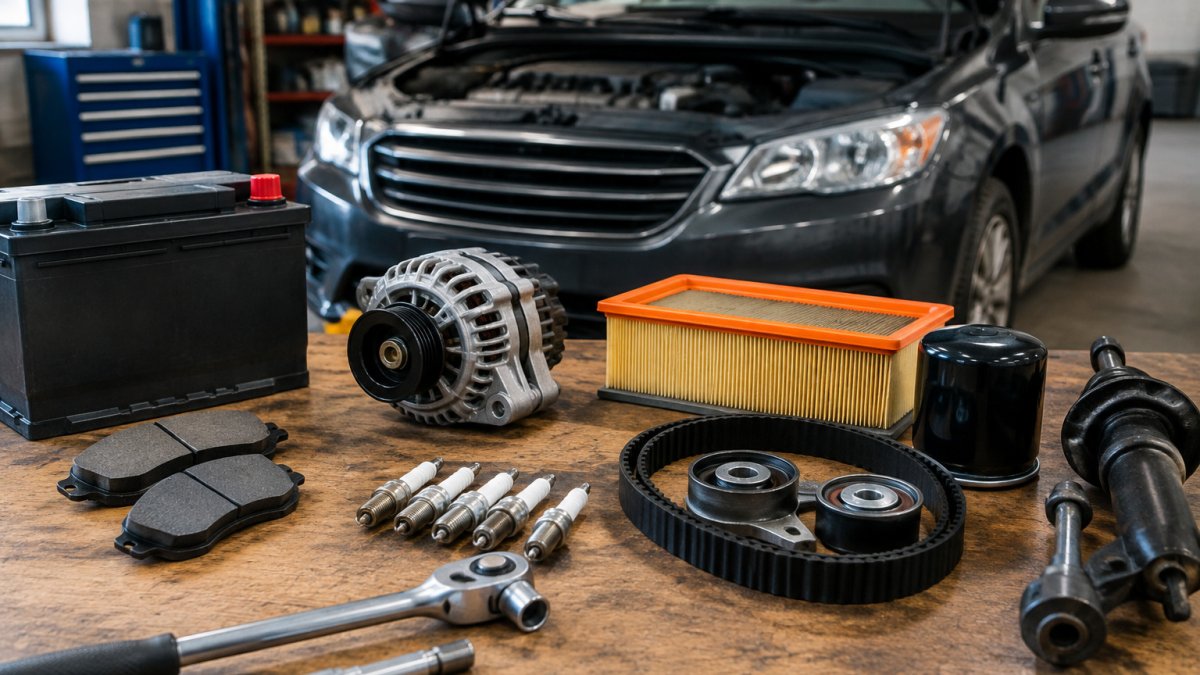
 Listicle
Which Used Cars Have the Easiest-to-Find Replacement Parts?
Last Updated: November 16, 2026
Quick Summary
The top five used cars with easy to find replacement parts are the Toyota Corolla, Honda Civic, Toyota Camry, Ford F-150, and Honda CR-V. Each earns its spot through high production volume, shared components across model years, and strong aftermarket and salvage-yard supply. The Corolla leads with the deepest aftermarket coverage of any compact.
- Production volume, shared components, vehicle age, and salvage supply drive how easy replacement parts are to find.
- The Corolla's aftermarket depth means many common repairs do not require a dealer visit.
- Camry base trims share the widest component pool; sport and hybrid variants narrow your options.
- F-150 cab style, bed length, engine, and drivetrain all change which parts fit.
- Check brake pads, an alternator, and a headlight assembly for your exact trim before buying.
Table of Contents
- Why Parts Availability Should Drive Your Used-Car Shortlist
- Quick Comparison: Top Five Used Cars With Easy-to-Find Replacement Parts
- 1. Toyota Corolla: The Compact With the Deepest Aftermarket
- 2. Honda Civic: Shared Components Across Generations
- 3. Toyota Camry: Midsize Volume Means Parts Everywhere
- 4. Ford F-150: The Truck With Salvage-Yard Supply
- 5. Honda CR-V: Cheap Replacement Parts, Verified by Repair-Cost Data
- The Easiest Used Cars to Repair (and How to Tell Before You Buy)
- Frequently Asked Questions
Why Parts Availability Should Drive Your Used-Car Shortlist
Shopping for the top five used cars with easy to find replacement parts starts with one hard truth: a car you cannot fix cheaply is a car you cannot afford to keep. Parts supply decides whether a repair takes an afternoon or a week of waiting.

Reliability gets all the attention. Parts availability is what keeps a reliable car on the road after a fender bender, a failed alternator, or a worn-out water pump. A model with deep aftermarket support means more brands making the same component, more salvage-yard donors, and more chances to compare prices instead of paying whatever the dealer quotes.
Four forces drive parts availability, and understanding them lets you judge any model before you buy. First, production volume: the more units of a model sold, the more incentive aftermarket manufacturers have to tool up and stock parts. Second, shared components: platforms and parts bins shared across model years and trim levels widen the pool of compatible donors. Third, vehicle age: older models often have the deepest aftermarket coverage because the pool of potential buyers for replacement parts is largest. Fourth, salvage supply: high-volume models generate a steady stream of wrecked donors, which keeps used body panels, engines, and drivetrain parts flowing to yards.
That is why we build shortlists around parts first, then check reliability second. If you want a practical checklist for verifying a car's reliability and parts support before you commit, our guide on how to check used car reliability walks through the seven steps we recommend.
Quick Comparison: Top Five Used Cars With Easy-to-Find Replacement Parts
Here is the ranked shortlist at a glance. Every pick earns its spot on parts supply, not just reputation.
| Rank | Model | Body Style | Parts Strength | Watch For |
|---|---|---|---|---|
| 1 | Toyota Corolla | Compact sedan | Deepest aftermarket coverage | High resale prices |
| 2 | Honda Civic | Compact sedan | Shared components across generations | Theft risk on older years |
| 3 | Toyota Camry | Midsize sedan | Huge production volume | Popular trims sell fast |
| 4 | Ford F-150 | Full-size truck | Strong salvage-yard supply | Configuration mismatches |
| 5 | Honda CR-V | Compact SUV | Low repair costs with replacement parts | Trim-specific electronics |
If you want more sedan options under a budget to compare against these five, our review of reliable used sedans under 15k covers the alternatives.
1. Toyota Corolla: The Compact With the Deepest Aftermarket
The Corolla is widely regarded for its aftermarket depth. Independent parts makers produce Corolla components at many price points, so routine maintenance and common repairs often do not require a dealer visit.
Production volume is the engine behind that supply. Toyota has sold the Corolla in large numbers for decades, and that popularity has pushed parts makers to stock components for many model years.
Best for: commuters and first-time buyers who want the lowest-friction ownership experience. Skip if: you need cargo space or all-wheel drive.
A common mistake is buying the cheapest no-name part to save a few dollars. Check fitment against your exact model year and trim before ordering, because Corolla generations changed enough that a part for one year will not always fit the next.
2. Honda Civic: Shared Components Across Generations
Honda's parts strategy favors the Civic owner. Many components carry over between model years and trim levels, which widens your sourcing options and keeps prices competitive.
That shared-component design means a salvage-yard search often turns up usable parts from several nearby model years. Compare sourcing options across OEM parts, aftermarket brands, and used components before you buy, and check fitment carefully, since electronics and trim-specific pieces vary more than mechanical parts do.
Best for: drivers who want a compact with strong local parts-store inventory. Skip if: you are set on a specific high trim, where specialized parts are scarcer.
3. Toyota Camry: Midsize Volume Means Parts Everywhere
Camry parts are widely stocked. The model's long production run and steady popularity mean many parts stores, online retailers, and salvage yards carry components for it.
What most guides miss is that Camry trim levels matter for parts sourcing. Base trims share the widest component pool, while sport and hybrid variants narrow your options. Stick with common trims if easy sourcing is the priority, and confirm fitment by year, engine, and trim before ordering.
Best for: families who want midsize comfort with easy, affordable repairs. Skip if: you want a hybrid and need the widest possible parts pool.
4. Ford F-150: The Truck With Salvage-Yard Supply
The F-150 is known for salvage-yard depth. Ford has built the F-150 in massive numbers for decades, so wrecked trucks supply a steady stream of used body panels, engines, and drivetrain components.
Trucks complicate parts shopping, though. Configuration matters: cab style, bed length, engine, and drivetrain all change which parts fit. A part pulled from a different configuration may look identical and still not work. Verify the donor vehicle's specs before you buy anything from a salvage yard.
Best for: buyers who need a truck and want affordable used parts. Skip if: you rarely haul or tow, since a sedan is cheaper to maintain.
5. Honda CR-V: Cheap Replacement Parts, Verified by Repair-Cost Data
The CR-V closes the list because repair-cost research backs up its parts story. According to Aftermarket Matters' report on vehicles with the cheapest and most expensive replacement-part repair costs, the 2022 Honda CR-V with the 1.5L automatic ranks among vehicles with the lowest repair costs involving replacement parts. That is real evidence, not marketing.
Compact SUVs carry more trim-specific electronics than sedans, so check component compatibility before buying used modules or sensors. Mechanical parts remain widely available and budget-friendly.
Best for: buyers who want SUV space with sedan-like parts costs. Skip if: you need serious towing capacity.
The Easiest Used Cars to Repair (and How to Tell Before You Buy)
The easiest used cars to repair share three traits: high production volume, shared components across model years, and strong aftermarket and salvage-yard supply. You can verify all three before you buy, and we walk through the full inspection process in our used car buying guide.
Start with a parts-availability check. Search a few common components for the exact year, make, model, and trim: brake pads, an alternator, a headlight assembly, a water pump. If multiple retailers list them in stock, the model passes. If you find one listing and a long delivery time, walk away. A common pattern is that national parts-store websites show local inventory and same-day pickup, while online retailers show shipping windows, use both to gauge real-world access.
Separate parts availability from repair affordability, because they are not the same thing. A part can be easy to find and still expensive, or cheap and hard to source. Check both. Labor costs vary by design too: a transverse engine in a compact sedan usually means simpler access than a tightly packed SUV bay. Ask a local shop for a labor estimate on a common job like a water pump or alternator before you commit.
Regional supply matters as well. Rural buyers may face longer delivery times, so confirm local inventory or plan for shipping before you commit. Urban buyers often have more salvage-yard coverage and same-day parts-store stock, while remote buyers should check delivery windows and return policies. A practical sourcing checklist: verify fitment by VIN or exact trim, compare OEM versus aftermarket brands, confirm return windows, and estimate delivery time before ordering. Watch out: skipping the fitment check is the mistake that costs buyers the most, a part that fits the model but not the trim gets returned, and return shipping adds up fast.
Buy & Buy Auto Sales offers a diverse selection of quality new and pre-owned cars, and you can browse our used auto inventory or explore reliable pre-owned vehicles in Columbus to find the right vehicle for you.
A shortlist built on parts availability saves you money for as long as you own the car. Buy & Buy Auto Sales makes that ownership easier with financing options regardless of credit history, no hidden fees, and down payment flexibility, so you can get pre-qualified in minutes and get behind the wheel faster. Get started with Buy & Buy Auto Sales and drive home a used car you can actually afford to maintain.
Frequently Asked Questions
What is the easiest car to find parts for?
The Toyota Corolla and Honda Civic are the two easiest because of production volume and a deep aftermarket. Check fitment by year, make, model, and trim before buying.
Which car brand has the cheapest replacement parts?
Parts pricing varies by model and source, so compare options before you buy. Compare prices across OEM, aftermarket, and salvage-yard sources.
How can I check whether a used car's parts are readily available?
Search by year, make, model, and trim, then check with local parts stores and salvage yards. Ask about delivery time and whether the part is OEM, aftermarket, or salvage. A pre-purchase inspection checklist should include this parts check.
Does a car's model year affect replacement-part availability?
Yes. Newer model years often have more OEM and aftermarket supply, while older or discontinued models may rely on salvage yards and aftermarket sellers. Availability varies by part. Always verify fitment for the exact model year and trim before buying a used car.